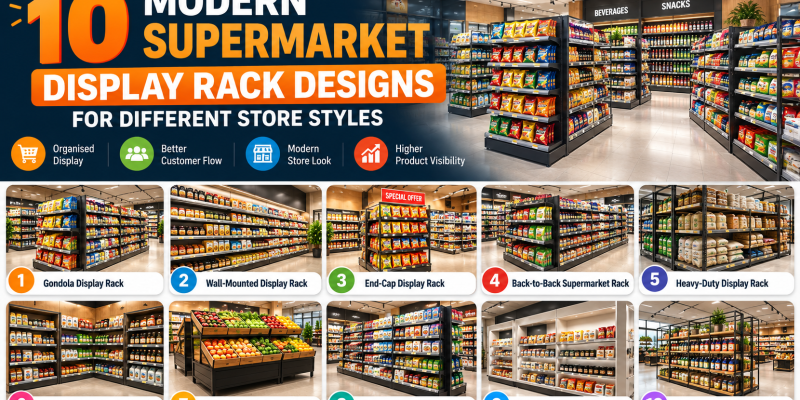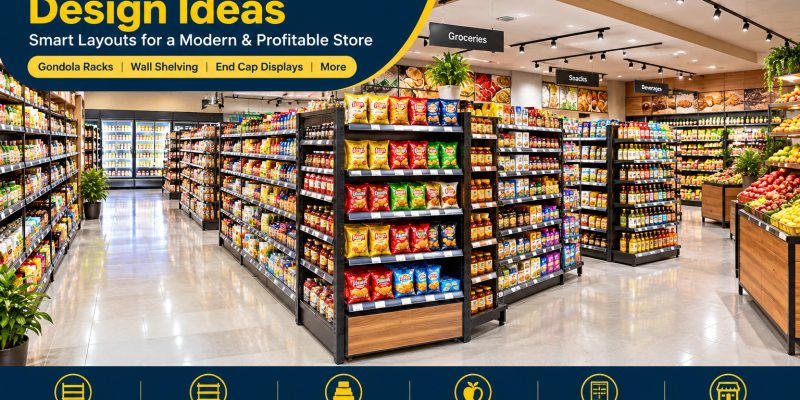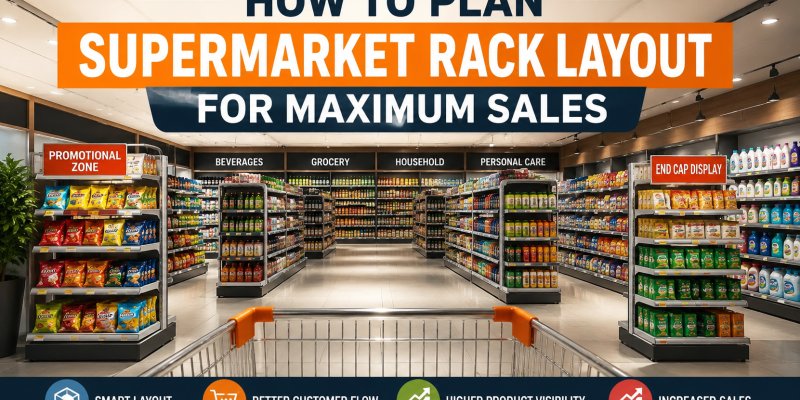
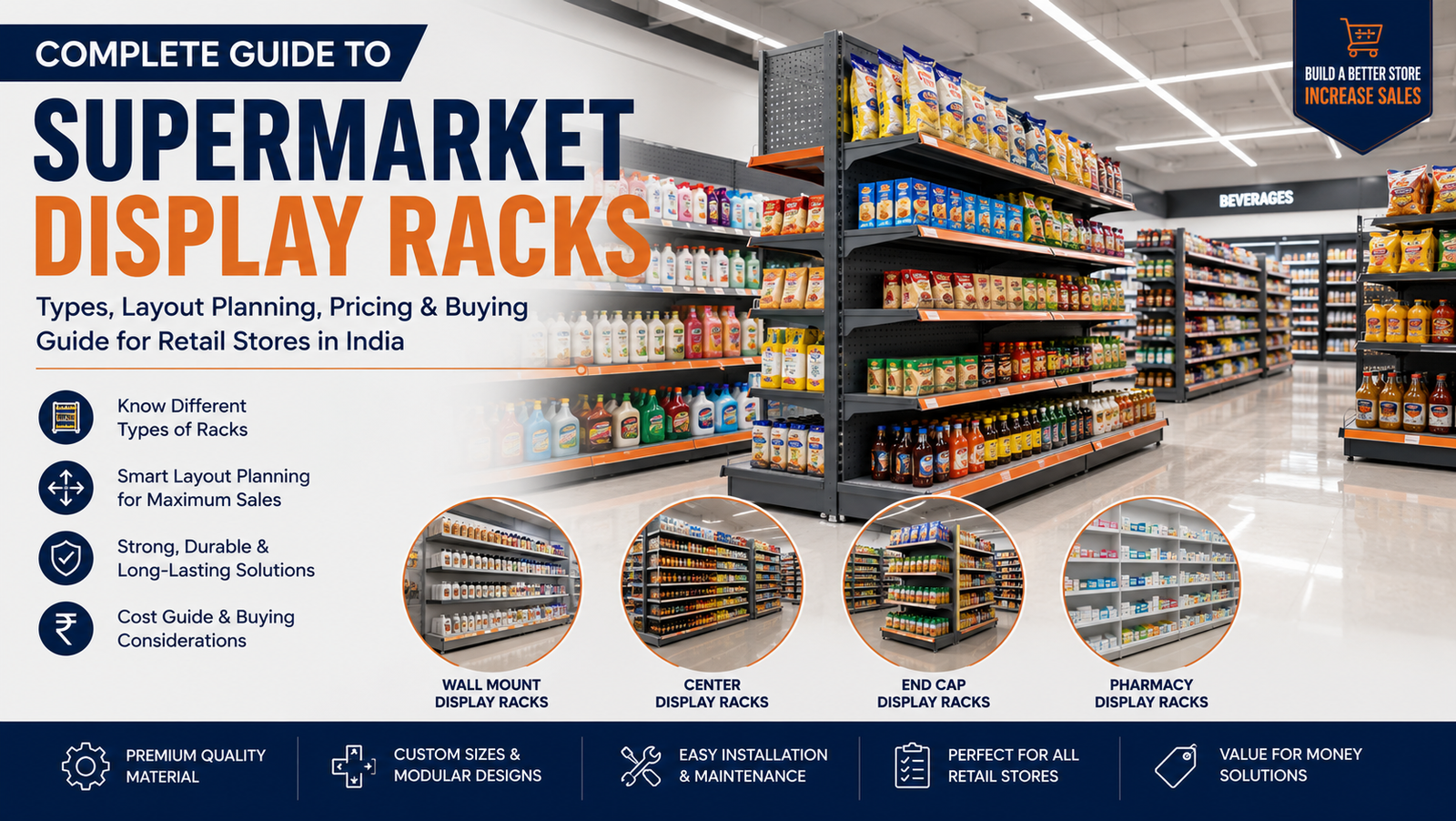
This Complete Guide to Supermarket Display Racks explains everything retailers need to know about rack types, layout planning, shelving systems, materials, maintenance, and practical buying considerations.. Choosing the right display rack depends on factors such as store size, product categories, available floor space, layout planning, durability, and future expansion. This guide explains different supermarket rack types, layout planning principles, material selection, maintenance practices, and practical buying considerations to help retailers build an efficient and well-organized store.
Walk into any successful supermarket, grocery store, or retail outlet, and you’ll notice one thing immediately—products are neatly organized, aisles are easy to navigate, and customers can quickly find what they need. While product selection and pricing matter, the way merchandise is displayed plays an equally important role in creating a smooth shopping experience. This is where supermarket display racks become an essential part of retail store planning.
A well-designed display rack system is much more than a place to store products. It helps retailers utilize available floor space efficiently, improves product visibility, supports inventory organization, and creates a comfortable shopping environment. Whether you’re planning a new supermarket, renovating an existing grocery store, or expanding your retail business, selecting the right rack system is one of the most important decisions during store setup.
This guide has been created as a comprehensive educational resource for retailers, business owners, and store planners. Instead of focusing on a single rack model, it explains the complete process—from understanding different rack types and layout planning to choosing suitable materials, avoiding common mistakes, and maintaining long-term durability.
By the end of this guide, you’ll have a practical understanding of how different supermarket display racks work together to create an organized retail environment and what factors should be considered before making a decision.
Throughout this Complete Guide to Supermarket Display Racks, you’ll learn how different shelving systems work together to improve retail organization and customer experience.
Key Takeaways from This Complete Guide to Supermarket Display Racks
✔ Understand what supermarket display racks are and why they matter.
✔ Learn the different types of racks used in modern retail stores.
✔ Discover how layout planning influences customer movement.
✔ Compare common rack materials and construction options.
✔ Avoid common planning mistakes before setting up your store.
✔ Understand the factors that affect rack durability and long-term performance.
What Will You Learn in This Complete Guide to Supermarket Display Racks?
Supermarket display racks are modular shelving systems designed to organize, display, and store products in retail environments. They help retailers arrange merchandise systematically so customers can easily locate products while making efficient use of available floor space.
Unlike ordinary storage shelves, supermarket display racks are designed with both functionality and customer experience in mind. They provide structured product placement, improve visibility, support inventory management, and contribute to an organized store layout.
Modern retail stores often use a combination of rack types to suit different product categories. For example, center gondola racks create shopping aisles, wall-mounted racks maximize perimeter space, and end-cap displays highlight promotional or seasonal products. Together, these fixtures create a cohesive shopping environment that balances accessibility, product presentation, and efficient use of space.
Choosing the right display system is not only about increasing storage capacity—it also affects customer movement, merchandising flexibility, restocking efficiency, and the overall appearance of the store.
Common Places Where Supermarket Display Racks Are Used
- Supermarkets
- Grocery Stores
- Departmental Stores
- Hypermarkets
- Convenience Stores
- Medical Stores
- Retail Chains
- Mini Markets
- Kirana Stores
- Wholesale Retail Outlets
Key Components of a Supermarket Display Rack
| Component | Purpose |
|---|---|
| Upright Frames | Provide structural support for the rack. |
| Base Shelves | Hold heavier products at the bottom. |
| Adjustable Shelves | Allow flexible product arrangement. |
| Back Panels | Support products and improve appearance. |
| Shelf Brackets | Secure shelves to the frame. |
| End Frames | Add stability to the rack system. |
| Accessories | Hooks, dividers, baskets, and price holders. |
Expert Insight
The best rack system is not necessarily the one with the highest number of shelves. It is the one that matches your product categories, available floor space, customer traffic, and future expansion plans. A modular system usually provides greater flexibility as your retail business grows.
Key Takeaway
A supermarket display rack is part of a complete retail shelving system designed to improve organization, customer convenience, and space utilization—not simply a storage fixture.
Why Are Display Racks Important in Modern Retail Stores?
Retail stores today compete not only through product variety and pricing but also through the shopping experience they provide. A well-planned display rack system helps customers navigate the store comfortably, discover products more easily, and spend less time searching for everyday items.
An organized layout also benefits store operations. Staff can replenish inventory efficiently, maintain cleaner aisles, and monitor stock more effectively. When products are displayed logically, the store appears more professional and customers often find it easier to compare products within the same category.
Another important advantage is efficient use of available space. Every retail store has limited floor area, and properly planned shelving helps maximize product display without making the store feel overcrowded.
However, choosing the right display racks is only one part of retail planning. The arrangement of shelves, aisle width, and customer walking paths also play a major role in improving product visibility and creating a smooth shopping experience. To understand these best practices in detail, read our guide on Supermarket Rack Layout for Maximum Sales.
Benefits of Well-Planned Display Racks
- Better product organization
- Improved customer navigation
- Efficient use of floor space
- Enhanced product visibility
- Easier inventory management
- Flexible shelf adjustment for different products
- Cleaner and more professional store appearance
- Improved merchandising opportunities
- Simplified store maintenance
- Support for future layout modifications
How Display Racks Support Retail Operations
| Retail Objective | Contribution of Display Racks |
|---|---|
| Product Organization | Products remain grouped by category. |
| Space Optimization | Maximizes usable display area. |
| Customer Navigation | Creates clear aisles and shopping paths. |
| Merchandising | Highlights featured and seasonal products. |
| Inventory Control | Simplifies restocking and stock visibility. |
| Store Appearance | Creates a clean, professional retail environment. |
Practical Tip
Before selecting any display rack system, create a basic floor plan showing entrances, billing counters, storage areas, and customer movement. This makes it easier to determine the most suitable rack configuration for your available space.
Different Types of Supermarket Display Racks
Every retail store has unique space requirements, product categories, and customer traffic patterns. Because of this, there isn’t a single display rack that fits every supermarket. Instead, retailers typically use a combination of rack types to organize merchandise efficiently and improve the overall shopping experience.
For example, wall-mounted racks help utilize vertical space, while center gondola racks create shopping aisles. End cap displays attract attention to promotional products, and specialized racks are used for categories such as grocery items, pharmacy products, or crockery. Selecting the right combination depends on your store layout, product range, and merchandising goals rather than simply adding more shelves.
Below are the most commonly used supermarket display rack types and their ideal applications.
Wall Mounted Display Racks
Wall mounted display racks are installed along the store’s perimeter walls, making them ideal for utilizing vertical space without reducing aisle width. They are commonly used for packaged food, personal care products, household items, stationery, and other frequently purchased goods.
These racks improve product visibility while leaving the center of the store open for customer movement and additional merchandising displays.
Best For
- Grocery Stores
- Supermarkets
- Convenience Stores
- Medical Stores
✅ Explore our Wall Mount Display Rack solutions for efficient wall-space utilization.
Center Display Racks (Gondola Shelving)
Center display racks, often referred to as gondola shelving, are installed in the middle of the store to create organized shopping aisles. Since customers walk around these racks while browsing products, they play an important role in guiding customer movement and improving product accessibility.
Adjustable shelves make them suitable for displaying products of different sizes, making them one of the most versatile shelving systems used in supermarkets.
Best For
- Daily essentials
- Packaged foods
- Snacks
- Beverages
- Household products
✅ Learn more about our Center Display Rack solutions.
End Cap Display Racks
End cap display racks are positioned at the ends of shopping aisles where customer attention is naturally higher. Retailers frequently use these displays to showcase seasonal products, promotional offers, new arrivals, or impulse-buy items.
Rather than increasing storage capacity, their primary purpose is to improve product visibility and encourage additional purchases.
Best For
- Promotional products
- Seasonal collections
- Festive offers
- New product launches
✅ Discover practical End Cap Display Rack solutions for promotional merchandising.
Grocery Display Racks
Grocery display racks are designed for everyday retail products such as packaged food, grains, beverages, snacks, spices, and household essentials. Their modular shelf design allows retailers to adjust shelf heights according to changing product categories and inventory requirements.
A well-planned grocery shelving system also simplifies restocking and helps maintain a cleaner store appearance.
If you’re planning shelving specifically for grocery stores, explore our Grocery Display Rack solutions for different retail formats.
Pharmacy Display Racks
Pharmacy display racks are designed to organize medicines, healthcare products, wellness items, and personal care products while maintaining easy accessibility for customers and staff. These racks often include adjustable shelves and compact layouts to maximize storage within limited retail space.
For pharmacies and medical stores, efficient shelving contributes to better product categorization and faster customer service.
Corner Display Racks
Corner display racks help utilize areas that are often left unused in retail stores. They create a continuous shelving layout while improving space efficiency, especially in compact supermarkets and convenience stores.
These racks are commonly installed where two wall-mounted shelving units meet, ensuring that every corner contributes to product display instead of becoming dead space.
To see practical corner shelving options, visit our Wall Corner Rack collection.
Comparison Table
| Rack Type | Best Used For | Space Utilization | Flexibility |
|---|---|---|---|
| Wall Mounted Rack | Perimeter Display | Excellent | High |
| Center Gondola Rack | Main Shopping Aisles | Excellent | High |
| End Cap Rack | Promotions | Moderate | Medium |
| Grocery Rack | Daily Essentials | High | High |
| Pharmacy Rack | Healthcare Products | High | Medium |
| Corner Rack | Corner Areas | Excellent | Medium |
Key Takeaways
✔ Different rack types serve different merchandising purposes.
✔ A combination of wall, center, corner, and end-cap racks usually creates the most efficient retail layout.
✔ Choosing racks should depend on store layout, product categories, customer flow, and future expansion rather than shelf quantity alone.
How to Choose the Right Supermarket Display Rack
Selecting a supermarket display rack is not just about finding a design that looks appealing. The right choice should support your store layout, product categories, customer movement, and future business growth. A well-planned rack system improves product organization and allows retailers to adapt as inventory changes over time.
Before making a decision, evaluate the following factors:
1. Store Size and Available Floor Space
Measure the usable floor area and identify locations for entrances, billing counters, storage rooms, and customer walkways. The rack configuration should maximize product display while maintaining comfortable aisle widths.
2. Product Categories
Different products require different shelf depths, heights, and load capacities. Plan shelving based on product type instead of using identical racks throughout the store.
3. Shelf Adjustability
Adjustable shelves provide flexibility as product packaging and inventory change over time. Modular shelving systems are generally easier to reconfigure than fixed designs.
4. Load Capacity
Evaluate the weight of products that will be displayed. Heavier items such as packaged grains or bulk groceries require stronger shelves and reinforced frames.
5. Future Expansion
Choose a modular rack system that can be extended if the store grows or product categories increase.
Supermarket Display Rack Selection Checklist
✔ Measure available floor space.
✔ Plan customer walking paths.
✔ Identify product categories.
✔ Select suitable rack types.
✔ Verify shelf load capacity.
✔ Prefer adjustable shelving systems.
✔ Consider future expansion.
✔ Ensure easy maintenance and cleaning.
Expert Tip
Many retailers focus only on the number of shelves they can install. A better approach is to balance storage capacity with customer comfort. Wider aisles, logical product grouping, and flexible shelving often create a better shopping experience than simply increasing the number of display racks.For detailed guidance on planning aisle width, shelf placement, and customer movement, read our guide on Supermarket Rack Layout for Maximum Sales.
Supermarket Rack Design Considerations
An attractive rack design is not only about aesthetics—it should also improve product accessibility, customer convenience, and merchandising flexibility. A well-designed supermarket shelving system balances functionality with visual appeal, ensuring that products remain easy to find while creating a pleasant shopping experience.
When designing a retail store, consider how shelving height, aisle spacing, lighting, and product visibility work together. These small details can significantly influence customer engagement and store organization.
Important Design Factors
Shelf Height
Shelves should be high enough to maximize storage but low enough to maintain visibility across the store.
Product Visibility
Fast-moving products should be displayed at eye level whenever practical, while heavier items are generally placed on lower shelves.
Aisle Width
Adequate aisle space improves customer comfort and allows shopping carts to move easily without congestion.
Lighting
Proper lighting highlights displayed products and creates a brighter shopping environment.
Color Consistency
Using consistent rack finishes and store branding helps create a professional appearance.
Flexibility
Adjustable shelving systems allow retailers to modify displays as product categories change.
Design Best Practices Checklist
✔ Maintain consistent aisle spacing.
✔ Keep promotional displays uncluttered.
✔ Avoid blocking customer sight lines.
✔ Use adjustable shelving whenever possible.
✔ Organize products by category.
✔ Reserve premium locations for featured products.
Continue Reading
Looking for inspiration before planning your retail store?
Materials Used in Supermarket Display Racks
The durability and performance of a supermarket display rack depend largely on the materials used during manufacturing. Different materials offer different levels of strength, appearance, maintenance, and long-term reliability. Choosing the right material should be based on product weight, store environment, and expected usage rather than appearance alone.
Mild Steel Stainless Steel
Stainless steel racks are preferred in environments where moisture resistance and hygiene are important, such as medical stores or specialty retail spaces.
Powder-Coated Finish
A powder-coated surface helps protect steel racks from corrosion, scratches, and everyday wear while also giving them a clean, professional appearance.
Wood and Metal Combination
Retailers seeking a premium store appearance sometimes choose display systems that combine wooden shelves with metal frames. These are commonly used for specialty stores and selected retail sections.
Material Comparison
| Material | Strength | Maintenance | Common Applications |
|---|---|---|---|
| Mild Steel | Excellent | Low | Supermarkets & Grocery Stores |
| Stainless Steel | Excellent | Very Low | Medical & Specialty Stores |
| Powder-Coated Steel | Excellent | Low | General Retail |
| Wood + Metal | Moderate | Medium | Premium Retail Displays |
Expert Insight
Material selection should always consider expected product load, store environment, and long-term maintenance rather than appearance alone.Explore our collection of Supermarket Rack Design Ideas to see practical shelving concepts for different store sizes and retail formats.
Factors That Affect Rack Durability
A display rack’s lifespan depends on much more than the material used. Manufacturing quality, installation, maintenance, and daily usage all contribute to long-term performance.
Key Factors
Steel Thickness
Thicker steel generally provides better structural stability, particularly for shelves displaying heavy products.
Powder Coating Quality
A uniform powder-coated finish improves resistance to scratches, corrosion, and everyday wear.
Load Capacity
Every shelf should be used within its recommended load capacity to avoid deformation over time.
Welding Quality
Strong and consistent welding improves structural integrity and overall rack stability.
Shelf Adjustability
Properly engineered adjustable shelves maintain stability while allowing retailers to reorganize product displays as inventory changes.
Regular Maintenance
Routine inspections, cleaning, and timely replacement of damaged components help extend the service life of display racks.
Quick Maintenance Checklist
✔ Clean shelves regularly.
✔ Inspect bolts and brackets periodically.
✔ Avoid overloading shelves.
✔ Replace damaged accessories promptly.
✔ Check rack stability after store modifications.
Key Takeaways
- Good layout planning improves customer movement and space utilization.
- Rack design should prioritize functionality alongside aesthetics.
- Material selection affects durability, maintenance, and long-term performance.
- Proper installation and regular maintenance significantly extend the lifespan of supermarket display racks.
Common Mistakes While Choosing Supermarket Display Racks
Choosing supermarket display racks without proper planning can lead to poor space utilization, uncomfortable customer movement, and higher replacement costs. Many retailers focus only on the number of shelves or the initial investment, while overlooking practical factors such as layout, load capacity, product categories, and future expansion.
Understanding these common mistakes before setting up a store can help retailers create a more organized, efficient, and customer-friendly shopping environment.
1. Selecting Racks Without Measuring Available Space
One of the most common mistakes is purchasing display racks before preparing a store layout. Without accurate measurements, racks may block customer movement, reduce aisle space, or create an overcrowded shopping environment.
Best Practice
Measure the available floor area and prepare a simple layout plan before selecting any shelving system.
2. Using the Same Rack Type Throughout the Store
Different product categories require different shelving solutions. Installing identical racks across every section often results in inefficient product presentation and poor space utilization.
For example:
- Grocery items may require adjustable shelving.
- Promotional products perform better on end-cap displays.
- Medicines are better organized using pharmacy display racks.
3. Ignoring Shelf Load Capacity
Every shelf has a recommended weight limit. Overloading shelves may reduce their lifespan and affect structural stability.
Retailers should always match shelf capacity with the type of products being displayed.
4. Prioritizing Appearance Over Functionality
A visually attractive rack is beneficial, but functionality should always come first.
Factors such as accessibility, adjustability, maintenance, and durability usually have a greater long-term impact than appearance alone.
5. Not Planning for Future Expansion
Many stores expand their product range over time. Choosing modular shelving systems makes future modifications easier without replacing the complete display setup.
Expert Tip
Before finalizing any display rack system, think about how your store may look two or three years from now. A modular layout is often more adaptable than a fixed shelving arrangement.
Continue Reading
This guide covers only the most common planning mistakes. If you’d like a detailed explanation with practical examples and solutions, explore our dedicated article:
👉 Top Mistakes to Avoid When Buying Supermarket Display Racks
Benefits of a Well-Planned Display Rack System
A thoughtfully planned display rack system does more than organize products—it supports day-to-day retail operations, improves customer convenience, and makes better use of available store space. While the exact impact depends on the store format and merchandising strategy, well-designed shelving contributes to a smoother shopping experience.
Major Benefits
Better Product Organization
Products remain grouped by category, making them easier for customers to locate and compare.
Efficient Space Utilization
Proper shelving helps maximize display capacity while maintaining comfortable walking space.
Improved Customer Navigation
Clearly planned aisles and organized product sections reduce confusion and make shopping more convenient.
Easier Inventory Management
Organized shelving simplifies restocking, stock monitoring, and product rotation.
Flexible Merchandising
Adjustable shelves allow retailers to reorganize displays for seasonal products, promotional campaigns, or changing inventory.
Professional Store Appearance
Consistent shelving layouts create a clean and organized retail environment that enhances the overall shopping experience.
Benefits at a Glance
| Benefit | Business Impact |
|---|---|
| Organized Shelving | Easier product management |
| Better Visibility | Improved product discovery |
| Space Optimization | Efficient use of floor area |
| Customer Navigation | More comfortable shopping |
| Flexible Layout | Easier future modifications |
| Professional Appearance | Better retail presentation |
Continue Reading
To explore these advantages in greater detail, including practical retail examples, read our complete article👉 Top 10 Benefits of Investing in Quality Supermarket Display Racks for Your Retail Store
Frequently Asked Questions
What are supermarket display racks?
Supermarket display racks are retail shelving systems used to organize and display products in supermarkets, grocery stores, departmental stores, and other retail environments.
Which type of supermarket display rack is best?
The best option depends on your store layout, available space, product categories, and merchandising requirements. Most retailers use a combination of wall-mounted racks, center gondola racks, and end-cap displays
Which material is commonly used for supermarket display racks?
Powder-coated mild steel is widely used because it offers durability, strength, and long-term performance for most retail applications.
Why is supermarket rack layout planning important?
Proper layout planning improves customer movement, product visibility, inventory organization, and efficient use of retail space.
Can supermarket display racks be customized?
Yes. Modular shelving systems can often be configured in different sizes, shelf heights, and layouts depending on the available retail space and merchandising requirements.
How do I maintain supermarket display racks?
Regular cleaning, avoiding excessive shelf loads, inspecting brackets and fasteners, and replacing damaged components help extend the lifespan of display racks.
Are adjustable shelves better than fixed shelves?
Adjustable shelves provide greater flexibility because they allow retailers to reorganize displays as product sizes and inventory change over time
Which rack is suitable for promotional products?
End-cap display racks are commonly used to showcase promotional products, seasonal items, and new arrivals because they receive higher customer visibility
How can I improve space utilization in a supermarket?
Using a combination of wall-mounted racks, center gondola shelving, and corner racks helps maximize available floor space while maintaining comfortable customer movement.
How often should supermarket display racks be inspected?
Retailers should visually inspect shelving on a regular basis and perform a more detailed inspection periodically to ensure stability, safety, and proper maintenance.
Conclusion
Selecting supermarket display racks is not simply about installing shelves—it is about creating a retail environment that supports product organization, customer convenience, and efficient use of space. From understanding different rack types to planning layouts, selecting suitable materials, and avoiding common mistakes, each decision contributes to the overall performance of a retail store.
By following the planning principles discussed in this guide, retailers can build shelving systems that remain practical, flexible, and easy to manage as their business grows.
We hope this Complete Guide to Supermarket Display Racks helps you plan a more organized and efficient retail store.
If you’re now exploring shelving options after understanding these planning considerations, you can browse our Supermarket Display Rack solutions to see different configurations suitable for supermarkets, grocery stores, and retail outlets.