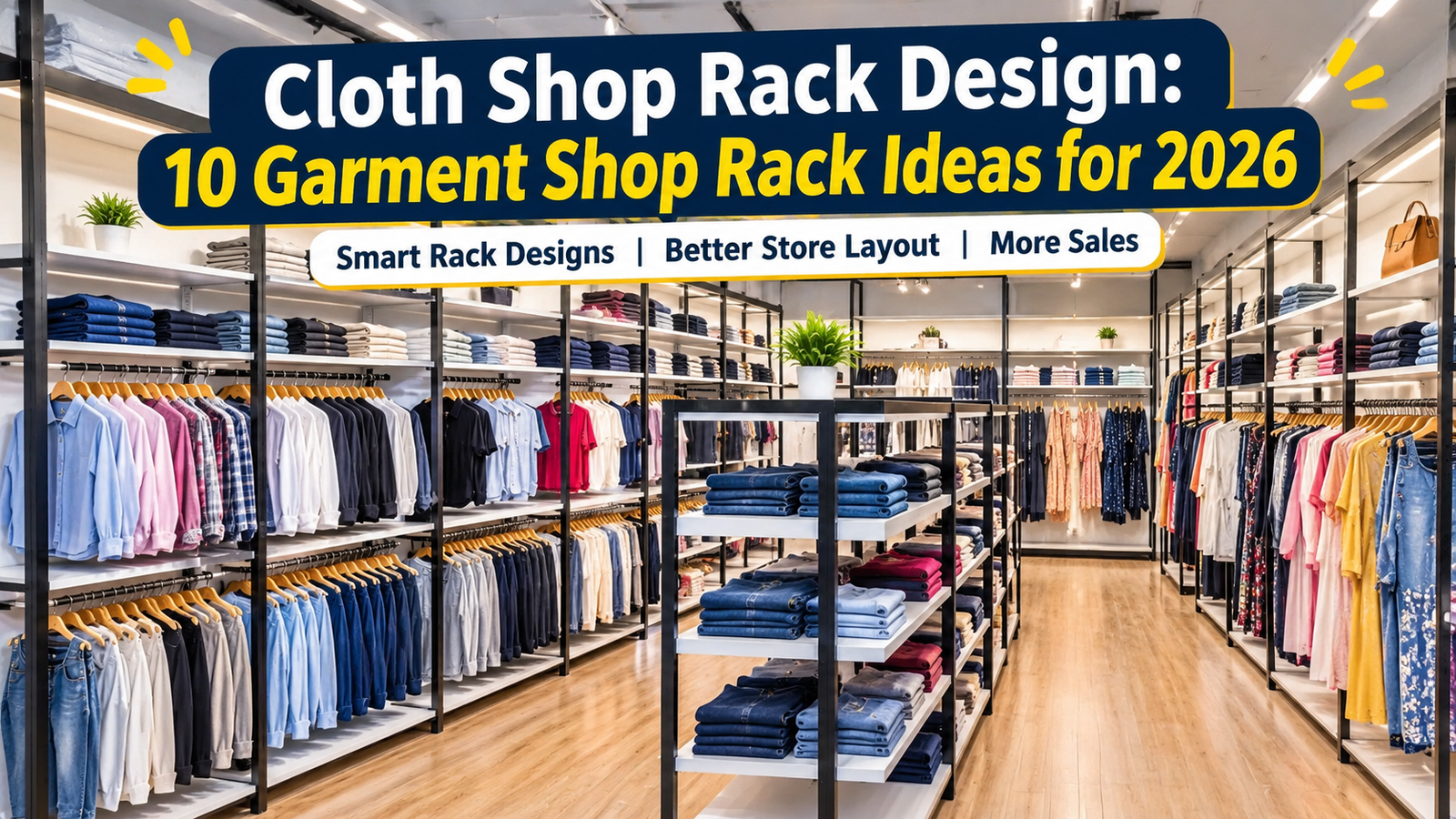
A customer enters your clothing shop, looks at a few shirts, checks the jeans section and then walks out. You may have good products at reasonable prices, but if the shop feels crowded or customers cannot find what they need, they may not spend much time browsing.
A practical cloth shop rack design helps you arrange products in a way that makes sense. Shirts need hanging space, folded jeans need proper shelves, and sarees need enough room to be displayed neatly. Each section should have a purpose.
You don’t need an expensive showroom interior to organise your shop well. You need suitable fixtures, sensible spacing and a layout that matches the clothes you sell. Let’s look at 10 useful ideas, along with materials, layout suggestions and things to check before placing an order.
Which design should you choose?
For a small clothing shop, start with wall-mounted rails, shelves and a compact corner unit. Medium-sized stores can combine wall displays with a centre island. Larger showrooms can use double-sided shelving, hanging sections and separate product zones. Your garment collection and available floor space should decide the final arrangement.
Types of Rack Designs for Clothing Stores
There isn’t one design that works for every shop. A boutique selling dresses has different requirements from a readymade shop selling jeans, shirts and everyday clothing.
Here are 10 options worth considering when planning a rack design for garment shop use.
1. Single-Bar Hanging Rack
A single-bar unit has one horizontal rod supported by a frame or wall brackets. Clothes are hung directly on it using hangers. It works well for shirts, trousers, jackets, dresses and everyday kurtis.
The main advantage is easy browsing. Customers can move garments along the rod and check different sizes or colours without disturbing the rest of the collection. It is also a straightforward option for displaying new arrivals near the entrance.
One limitation is that it offers no dedicated space for folded products. If you sell jeans and T-shirts too, plan a separate shelf section rather than trying to use one hanging arrangement for everything.
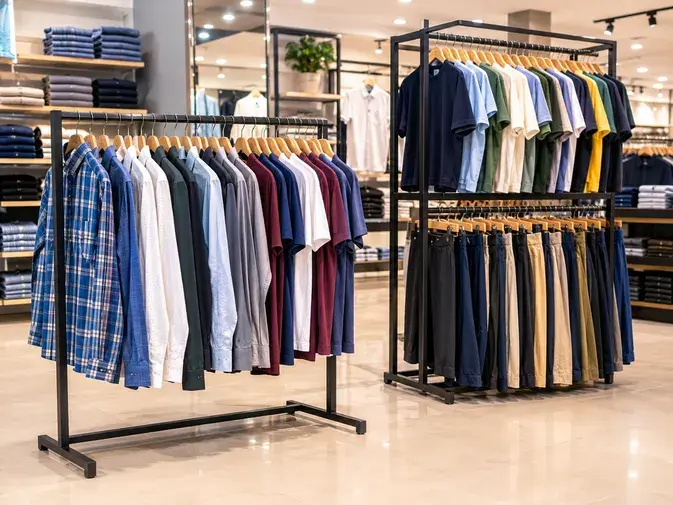
2. Double-Bar or Two-Tier Rack
A double-bar design has two horizontal hanging levels, one above the other. It can hold shirts, tops, trousers, children’s clothing and shorter garments.
This arrangement makes useful use of vertical space. For example, a small readymade shop in Gandhi Nagar could display men’s shirts on the upper section and trousers on the lower one, provided there is sufficient clearance.
The main limitation is garment length. Long dresses, gowns and full-length ethnic wear may touch the lower rail or floor. Measure the garments you intend to display before choosing this design.
3. Wall-Mounted Rack with Rail and Shelves
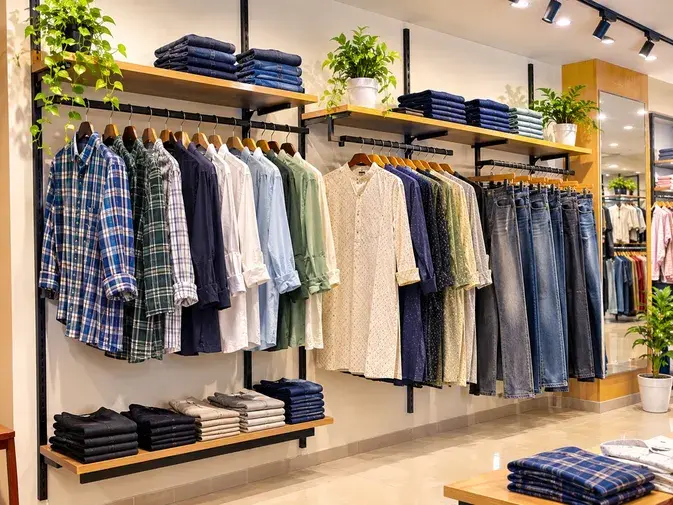
This system combines a hanging rod with shelves fitted above or below it. You can hang shirts and kurtis while keeping folded jeans, T-shirts or additional products on the shelves.
It is useful in narrow shops because the display uses wall space instead of occupying a large part of the floor. It also allows you to divide the store into sections without building permanent partitions.
For example, one wall can be used for men’s shirts and another for women’s tops. Just check the shelf depth and hanging clearance before finalising the arrangement.
Explore our wall-mounted display options for more ideas.
4. Gondola Shelving for Folded Clothes
A gondola is a free-standing unit with shelves, usually accessible from one or both sides. It is suitable for folded jeans, T-shirts, sweaters, leggings and casual wear.
A double-sided design lets customers browse from either side. It can also separate product categories without closing off the view of the shop.
This is a practical choice for a medium-sized store with enough aisle space. However, it isn’t suitable for every small shop. A large unit placed in the centre of a narrow store can make movement difficult. Measure the walking area before deciding its size
5. Round or Four-Way Display Stand
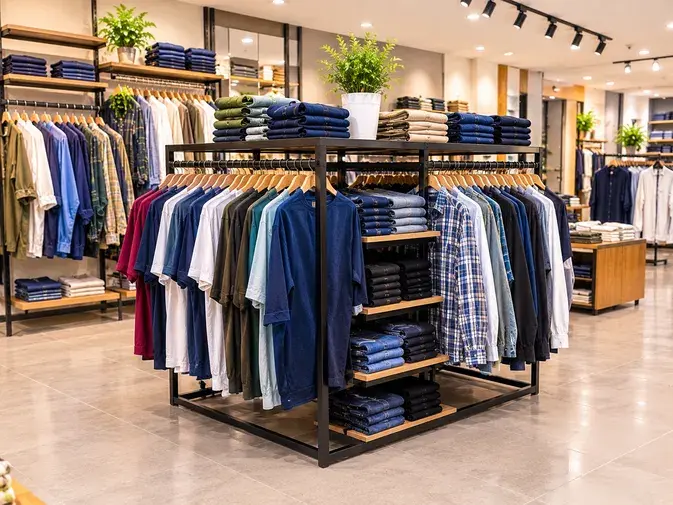
A round unit or four-way design allows customers to view clothes from several directions. Four-way versions usually have arms extending from a central frame, while round designs allow customers to browse around the unit.
These are useful for selected shirts, dresses, sale collections and seasonal products. You can place one near the entrance to give new arrivals better visibility.
The limitation is the floor area it occupies. It may not be a good choice for a narrow boutique with limited walking space. Also, don’t overload the arms. Customers should be able to separate the hangers comfortably.
6. Glass Shelf Display
Glass shelves can work well in boutiques and showrooms where presentation matters. They are suitable for folded shirts, scarves, handbags, accessories and selected premium clothing.
A glass rack design for cloth shop interiors can give a lighter appearance than a bulky solid shelf. You can also combine glass shelves with a metal frame to create a balanced look.
Glass needs regular cleaning, and fingerprints are easily visible. Use suitable safety glass with proper support. It may not be the most practical choice for sections where customers handle products constantly or where heavy items are placed.
7. Slatwall or Slotted Panel Display
A slotted panel is a vertical display panel with grooves or slots where compatible shelves, hooks and hanging arms can be fitted.
It is useful for smaller products such as belts, caps, scarves and accessories. You can also change the positions of the fittings when your collection changes.
The benefit is flexibility. You don’t need to keep the same arrangement throughout the year. However, the system needs compatible fittings and proper installation. For a shop that only needs a simple hanging rail, this setup may be unnecessary.
8. Centre Island or Table Display
A centre island is a low table or free-standing unit placed in the middle of the shop. It is commonly used for folded jeans, T-shirts, sweaters, kids’ clothing and promotional collections.
Customers can pick up products easily, while the lower height keeps the shop’s overall view open. You can also change the displayed collection for festivals, new arrivals or seasonal sales.
A limitation is that a table uses floor space without providing much vertical storage. Leave sufficient room around it for customers to move comfortably.
You can explore our centre display rack designs while planning this arrangement.
9. Rack with Wheels
A wheeled unit has castor wheels fitted at the bottom. It can be moved when you need to clean the floor, change the layout or create space for a promotion.
It can be useful for boutiques and stores that frequently rearrange new arrivals. During winter or festive seasons, you may want to move selected products closer to the entrance.
Check the wheel quality and locking arrangement before ordering. A unit that moves when customers pull garments from it can become inconvenient. It also needs a stable frame suitable for the intended products.
10. Compact Corner Rack
A corner unit makes use of the area where two walls meet. It may include short hanging rails, shelves or a combination of both.
This is particularly useful in small shops where most of the main wall space is already occupied. You can use it for accessories, folded garments or selected collections that don’t require a large display.
The main limitation is reach. Products placed at the back of a deep corner shelf may be difficult to access. Keep frequently requested items near the front and don’t fill the corner simply to use every available space.
Materials That Matter: MS Steel, Powder Coating, Wood and Glass
The material affects the appearance, maintenance and overall cost of your shop fixtures. Don’t select a material only because it looks good in a photograph. Think about daily use and the products you plan to display.
Mild Steel (MS)
Mild steel is commonly used for metal frames, shelves and hanging structures. It can be fabricated in different sizes and arrangements, making it suitable for both simple and customised designs.
For regular shop use, check the frame construction, joints, finish and overall stability. The suitability of a particular design depends on how it is built and what you intend to place on it.
Powder-Coated Finish
Powder coating is a surface finish commonly applied to metal fixtures. It gives them a consistent appearance and helps protect the surface from everyday wear.
Black, white and grey are practical choices for many clothing interiors. You can also discuss other colours to match your shop’s walls, flooring and branding.
Stainless Steel
Stainless steel is an option when you want a particular appearance or corrosion-resistant material. It is generally more expensive than ordinary mild steel, so consider whether the additional cost is justified for your store.
Wood
Wooden shelves and panels can give boutiques and premium showrooms a warm appearance. They work well for selected folded products and feature sections.
Check the board quality and finishing. Poor-quality boards may not be suitable for frequent handling or the intended use.
Glass
Glass is useful for selected display areas, especially accessories and premium collections. It needs careful handling, regular cleaning and suitable support.
A combination of materials often makes more sense than using the same material everywhere. For example, you could use a metal frame with wooden shelves in a boutique and a powder-coated frame with simpler shelving in a readymade shop.
Customisation Options for Your Clothing Shop
Every shop has different dimensions and product requirements. A ready-made design may work for a standard layout, but some shops need changes to make proper use of their available space.
Dimensions: Decide the height, width and depth according to your walls, ceiling and garment lengths. A long hanging section needs different clearance from a shelf used for folded T-shirts.
Colour and finish: Choose a finish that works with your shop interior. Dark fixtures can create a strong contrast against light walls, while white or grey may suit a brighter showroom.
Shelf and rail arrangement: Some sections need more hanging space, while others need several shelves. You can combine both instead of ordering identical units for the entire shop.
Branding: A header panel or a selected feature area can be used for your shop name or collection identity. Keep branding simple enough that it doesn’t distract from the clothing.
Mobility: Wheels may help when displays need to move regularly. For fixed sections, a stable stationary arrangement may be more suitable.
Clothes Shop Display Ideas by Store Size
A good layout depends on the shape of your shop as well as its total area. Two stores with the same floor area may need different arrangements because of their entrance, pillars, counters and wall lengths.
| Shop size | Suggested arrangement | Main priority |
|---|---|---|
| Small: up to 250 sq ft | Wall rails, corner shelves and one compact display | Keep the centre open |
| Medium: 250–600 sq ft | Wall displays, hanging sections and a centre unit | Separate garment categories |
| Large: above 600 sq ft | Wall shelving, double-sided units and feature tables | Clear product zones |
These are starting points, not fixed rules.
Consider a 200 sq ft readymade shop in Gandhi Nagar. If the owner places two large centre units inside, customers may struggle to reach the back section. Wall displays with one smaller table may be a better use of the available space.
A bigger showroom in Jaipur or Mumbai may have room for separate men’s wear, women’s wear, ethnic wear and children’s clothing sections. Each section should be easy to recognise without making customers walk around unnecessary obstacles.
For more planning ideas, see our retail display layout options.
Display Planning According to Garment Type
The clothes you sell should decide the type of arrangement you use. Here are a few examples.
Saree Collection
A saree display stand for shop use should provide wide, accessible shelves or compartments. Folded sarees can be arranged according to fabric, colour, collection or price category.
Avoid stacking too many pieces in one place. When a customer wants to inspect a saree from the middle of a pile, the rest of the arrangement can quickly become untidy.
Keep selected designs on display and store additional pieces separately. This makes daily arrangement easier.
Jeans and Trousers
A jeans display rack with multiple shelves is useful for folded denim. Separate men’s, women’s and children’s collections, then organise them by size, fit or colour.
You can keep popular sizes at an easy-to-reach height. Avoid deep shelves where products at the back become difficult to find.
Ladies Kurtis and Tops
A ladies kurti display stand can use hanging rails for longer and embroidered styles. Shelves are useful for folded everyday cotton kurtis.
If your shop sells both casual and festive collections, keep the two categories separate. Customers looking for daily wear should not need to search through occasion wear.
Innerwear and Packaged Clothing
Shelves with separate compartments work well for packaged innerwear. Keep sizes and product categories organised so customers and staff can identify the right item quickly.
Place this section where customers can browse comfortably and with reasonable privacy.
Kids’ Clothing
Children’s clothing includes many sizes and smaller garments. Short hanging rails, low shelves and separate compartments are useful.
Keep baby wear, toddler clothing and older children’s clothing in different sections. Parents should be able to browse without having to reach high shelves for frequently requested sizes.
[Image: Indian clothing showroom with separate saree, jeans, kurti and kids’ clothing sections | alt: clothing store display arranged by garment category]
Buying Guide: What to Check Before Placing an Order
Before ordering, spend a little time planning the shop. It can prevent problems such as units that block an aisle or shelves that don’t suit the products.
Step 1: Measure the shop
Measure the wall lengths, height, entrance, pillars and counter area. Note any electrical points or other obstacles that may affect fixture placement.
Step 2: List the garments you sell
Write down your main categories. For example, shirts, jeans, sarees, kurtis, dresses and kids’ wear. This helps you decide how much hanging and shelf space each section needs.
Step 3: Plan the walking area
Customers should be able to enter, turn and browse without squeezing between units. Don’t use every inch of floor space for displays.
Step 4: Decide the number and type of units
Work out how many hanging sections, shelves, corner units and centre displays you actually need. Leave some room for future collections.
Step 5: Confirm specifications
Discuss dimensions, material, finish, shelf arrangement and any additional fittings. Ask for the final design or drawing before confirming the order.
Step 6: Confirm delivery and installation
Check how the units will be packed, delivered and assembled. Share your delivery city and store access details before the quotation is finalised.
What Decides the Cost of a Clothing Shop Setup?
The cloth stand for shop price depends on the design and specifications. Two units that look similar in a photograph may have different dimensions, material thicknesses and finishing requirements.
The main factors are:
- Size: Height, width and depth affect material use and fabrication.
- Material thickness: The type and thickness of the material can change the overall cost.
- Finish: Powder coating, polishing and other finishing requirements affect the quotation.
- Design: A simple hanging section is different from a unit with several shelves, adjustable parts or special fittings.
- Quantity: A single custom unit and a larger order may have different pricing.
- Quoting method: Some sellers quote per piece, while others use per foot or per sq ft.
This is why a garment shop rack price can differ from one supplier to another. The same applies when you compare the cloth shop rack price for a complete store setup.
Always compare quotations using the same unit and the same specifications. Check whether the quoted amount includes the frame, shelves, fittings, finishing, delivery and installation.
A low quotation may not include everything you need.
If you are planning a custom or bulk setup, you can review our garment display racks before discussing your requirements.
Need help planning your shop?
Bharat Display Solutions is based in Laxmi Nagar, New Delhi, and has been serving clients since 2020. We accept custom and bulk requirements and arrange delivery across India.
Send us your shop size, required number of units, garment types and delivery city. We can understand your requirements and discuss a suitable arrangement.
You can contact us for a quotation.
You can also share your requirements on WhatsApp.
Common Mistakes to Avoid When Planning Your Shop
Even a good-looking layout can become inconvenient when the basic requirements are ignored.
- Buying before measuring: A unit that looks small online may take up too much room after installation. Measure first.
- Using one design everywhere: Folded jeans, long dresses and packaged innerwear need different arrangements.
- Blocking the entrance: Don’t place a large unit where it makes the entrance or main aisle difficult to use.
- Ignoring shelf access: Very deep shelves can make the products at the back difficult to reach.
- Filling every corner: Empty space isn’t always wasted space. Customers need room to browse and staff need room to manage stock.
Final Checklist Before You Confirm Your Order
Go through these eight points before giving approval:
- Have you measured the shop, walls, entrance and available floor area?
- Have you decided which garment categories need hanging and which need shelves?
- Is there enough vertical clearance for long dresses and kurtis?
- Are the shelf heights and depths suitable for your folded products?
- Can customers walk comfortably between the units?
- Have you confirmed the material, finish, colour and dimensions?
- Have you checked the quotation unit, fittings, delivery and installation details?
- Have you kept some room for future collections and seasonal changes?
A simple floor plan with measurements can make the discussion much easier. Even a hand-drawn layout is useful when it clearly shows walls, entrance, counter and proposed fixture positions.
Frequently Asked Questions
Q.1 Which rack design is suitable for a small clothing shop?
Wall-mounted rails, corner units and a limited number of shelves are practical starting points. They use wall space and help keep the centre open. The final arrangement depends on the shop’s dimensions, entrance position and the type of garments you sell.
Q2. How do I plan shelves design for clothes shop interiors?
Start with the products you intend to fold and display. Decide the shelf depth and spacing according to the garments. Keep popular sizes and everyday products within easy reach. Avoid shelves that are too deep, as products at the back can become difficult to access.
Q3. Should I choose ready-made or custom-sized units?
Ready-made designs may work if your shop has standard dimensions and straightforward requirements. Custom units are worth considering when you have unusual wall lengths, limited space or specific product sections. Share measurements and confirm the final drawing before production.
Q4. What is the difference between cloth stand for shop price and garment shop rack price?
A cloth stand for shop price may refer to a simple hanging unit, while a garment shop rack price may refer to a larger or more detailed design. The actual cost depends on dimensions, material, finish and construction. Compare quotations with matching specifications rather than comparing the final amounts alone.
Q5. Are metal fixtures suitable for boutiques and premium showrooms?
Yes. Metal frames can work in boutiques and premium showrooms when their finish and design match the interior. You can combine metal with wooden or glass shelves for a different appearance. Choose the construction according to the garments, daily handling and overall shop layout.
Conclusion: Plan Your Cloth Shop Rack Design Before You Buy
A good cloth shop rack design starts with the clothes you sell and the space you have. You don’t need to fill every corner or purchase the same type of unit for the entire shop. A mixture of hanging sections, shelves and a few carefully placed displays is often more practical.
Measure your shop first. Decide which garments need hanging space, which need shelves and where customers should be able to walk freely. Then compare the designs and quotations based on the same requirements.
Bharat Display Solutions, located in Laxmi Nagar, New Delhi, has been serving retail fixture requirements since 2020, with custom orders and delivery across India.
If you’re planning a new clothing shop or updating an existing showroom, share your shop measurements, number of required units, garment categories and delivery city. Our team can discuss suitable options and provide a quotation.
Explore our garment display rack manufacturer in Delhi page or contact Bharat Display Solutions to discuss your requirements.