
What Is a Grocery Store Display Rack?
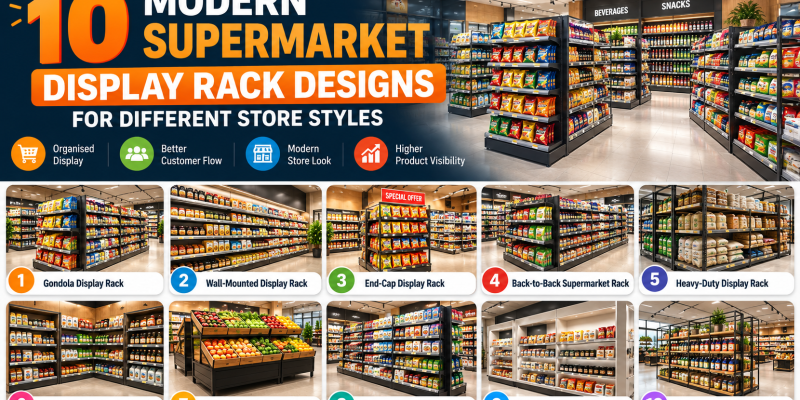
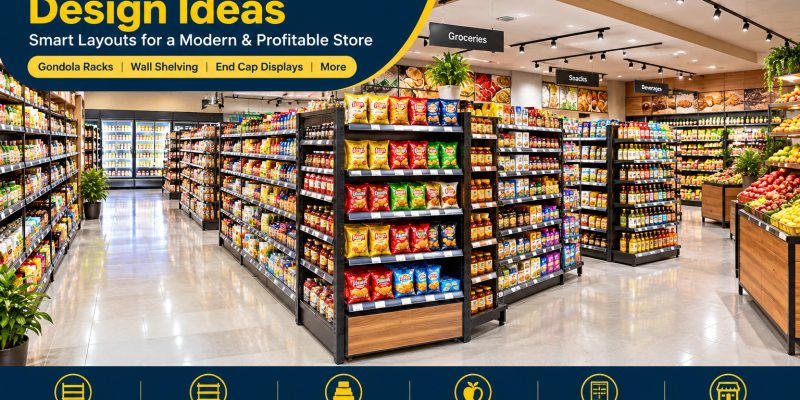
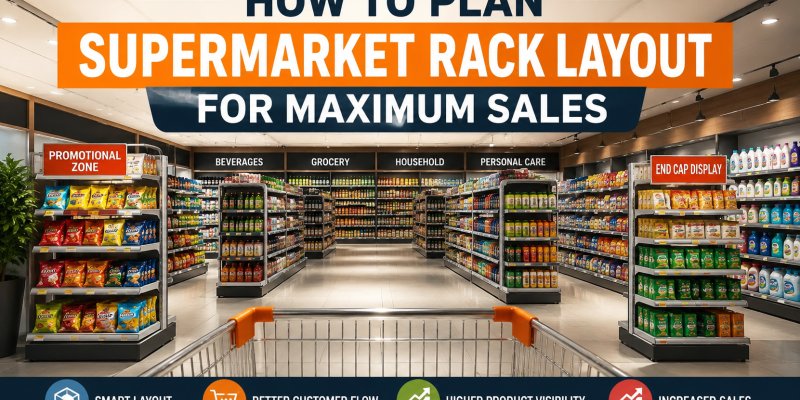
A grocery store display rack is a shelving system designed to organize, store, and showcase products in supermarkets, grocery stores, mini marts, and retail outlets. These racks improve product visibility, maximize floor space, enhance customer shopping experiences, and increase sales by presenting products in an organized manner.
Key Takeaways
- Grocery store display rack costs depend on size, material, design, load capacity, and customization requirements.
- Standard supermarket racks are more affordable than custom-designed retail shelving.
- Powder-coated MS (Mild Steel) display racks offer an excellent balance of durability and cost.
- Double-sided gondola racks provide maximum product display capacity.
- Buying directly from a display rack manufacturer can reduce overall project costs.
- Proper rack selection improves space utilization, customer flow, and product visibility.
- Bulk purchases often qualify for discounted pricing.
Grocery Store Display Rack Cost Overview
The cost of a grocery store display rack varies based on several factors, including dimensions, material quality, shelf configuration, and customization.
Average Price Comparison
| Rack Type | Best For | Estimated Cost Range |
|---|---|---|
| Wall Display Rack | Small Stores | Budget-Friendly |
| Single-Sided Rack | Grocery Stores | Moderate |
| Double-Sided Gondola Rack | Supermarkets | Moderate to Premium |
| Hypermarket Display Rack | Large Retail Stores | Premium |
| Heavy-Duty Display Rack | Bulk Product Storage | Premium |
| Customized Display Rack | Branded Stores | Highest Investment |
Actual pricing may vary depending on specifications, quantity, and location.
Selecting a reliable supermarket display rack manufacturer helps businesses avoid these challenges while ensuring long-term value.
What Is the Average Grocery Store Display Rack Cost?
The price of a grocery store display rack varies depending on its specifications. Basic wall-mounted racks generally cost less than heavy-duty double-sided gondola shelving or customized retail display systems.
The overall investment depends on:
- Rack dimensions
- Material quality (MS steel, stainless steel, etc.)
- Powder-coated finish
- Single-sided or double-sided design
- Weight-bearing capacity
- Number of shelves
- Custom branding or color options
- Delivery and installation requirements
What Is the Average Grocery Store Display Rack Cost?
The price of a grocery store display rack varies depending on its specifications. Basic wall-mounted racks generally cost less than heavy-duty double-sided gondola shelving or customized retail display systems.
The overall investment depends on:
- Rack dimensions
- Material quality (MS steel, stainless steel, etc.)
- Powder-coated finish
- Single-sided or double-sided design
- Weight-bearing capacity
- Number of shelves
- Custom branding or color options
- Delivery and installation requirements
Instead of choosing the cheapest option, retailers should focus on long-term durability and efficient product display.
Factors That Affect Grocery Store Display Rack Prices
1. Rack Size and Dimensions
Larger racks require more raw materials and manufacturing effort, increasing overall costs.
| Rack Size | Suitable For |
|---|---|
| Small | Convenience Stores |
| Medium | Grocery Shops |
| Large | Supermarkets |
| Extra Large | Hypermarkets |
Impact on Cost
- Taller racks require stronger support structures.
- Wider shelves increase material usage.
- Multi-tier shelving systems generally cost more.
2. Material Quality
The material used significantly influences durability and price.
| Material | Durability | Cost Level |
|---|---|---|
| Mild Steel (MS) | High | Moderate |
| Powder-Coated Steel | Very High | Moderate to Premium |
| Stainless Steel | Excellent | Premium |
Recommended Choice
Powder-coated MS supermarket display racks are widely preferred because they provide durability, corrosion resistance, and cost efficiency.

3. Number of Shelves
More shelves mean increased storage capacity and better product presentation.
| Feature | Standard Manufacturer | Reliable Manufacturer |
|---|---|---|
| Steel Grade | Average | Premium |
| Powder Coating | Basic | Advanced |
| Load Capacity | Moderate | High |
| Durability | Medium | Long-Term |
| Finish Quality | Average | Professional |
3. Number of Shelves
More shelves mean increased storage capacity and better product presentation.
| Shelf Configuration | Display Capacity |
|---|---|
| 3 Shelves | Basic |
| 4 Shelves | Standard |
| 5 Shelves | High |
| 6+ Shelves | Maximum |
4. Load Capacity
Heavy-duty display racks are designed to handle bulk inventory and heavier products.
| Load Capacity | Application |
|---|---|
| Light Duty | Snacks, Packaged Foods |
| Medium Duty | Grocery Products |
| Heavy Duty | Bulk Goods |
| Industrial Grade | Warehouse Storage |
5. Customization Requirements
Custom retail racks generally cost more because of additional manufacturing processes.
Customization options include:
- Store branding
- Custom colors
- Logo placement
- Special shelf dimensions
- Promotional display sections
- LED lighting integration
Standard vs Customized Grocery Store Display Racks
| Feature | Standard Rack | Customized Rack |
|---|---|---|
| Initial Cost | Lower | Higher |
| Lead Time | Faster | Longer |
| Design Flexibility | Limited | Extensive |
| Branding Options | Basic | Advanced |
| Space Optimization | Standard | Tailored |
| Visual Appeal | Good | Excellent |
Single-Sided vs Double-Sided Display Racks
| Feature | Single-Sided Rack | Double-Sided Rack |
|---|---|---|
| Placement | Wall Areas | Center Aisles |
| Storage Capacity | Moderate | High |
| Product Visibility | Good | Excellent |
| Floor Space Usage | Efficient | Maximum |
| Ideal For | Small Stores | Supermarkets |

How to Choose the Right Grocery Store Display Rack
Step 1: Measure Store Space
Determine available floor area and aisle width before selecting rack dimensions.
Step 2: Identify Product Categories
Consider the types of products being displayed:
- Grocery items
- FMCG products
- Packaged foods
- Household essentials
Step 3: Select Rack Type
Choose between:
- Wall display racks
- Gondola racks
- Hypermarket racks
- Heavy-duty storage racks
Step 4: Determine Load Requirements
Estimate the weight each shelf must support.
Step 5: Decide on Customization
Evaluate whether branded displays or custom configurations are needed.
Step 6: Compare Manufacturers
Review:
- Product quality
- Manufacturing experience
- Customization capabilities
- Warranty support
- Bulk order discounts
Why Quality Display Racks Are Worth the Investment
A well-designed grocery store display racks helps retailers:
- Organize products efficiently
- Maximize floor space
- Improve product visibility
- Increase customer convenience
- Boost impulse purchases
- Enhance the overall appearance of the store
Why Quality Display Racks Are Worth the Investment
A well-designed grocery store display rack helps retailers:
- Organize products efficiently
- Maximize floor space
- Improve product visibility
- Increase customer convenience
- Boost impulse purchases
- Enhance the overall appearance of the store
Why Quality Display Racks Are Worth the Investment
A well-designed grocery store display rack helps retailers:
- Organize products efficiently
- Maximize floor space
- Improve product visibility
- Increase customer convenience
- Boost impulse purchases
- Enhance the overall appearance of the store
Although premium racks may cost more initially, they provide better durability and long-term value than low-quality alternatives.
Grocery Store Display Rack Cost Comparison Table
| Rack Type | Best For | Features | Estimated Price Range* |
|---|---|---|---|
| Wall Mounted Display Rack | Small grocery stores | Space-saving, fixed against wall | ₹3,000 – ₹8,000 |
| Single-Sided Display Rack | Store perimeter display | Adjustable shelves, easy access | ₹4,500 – ₹10,000 |
| Double-Sided Center Rack | Supermarkets & retail aisles | Display products on both sides | ₹6,500 – ₹15,000 |
| End Cap Display Rack | Promotional products | Increases visibility at aisle ends | ₹3,500 – ₹9,000 |
| Corner Display Rack | Utilizing corner spaces | Maximizes unused areas | ₹3,000 – ₹7,000 |
| Heavy-Duty Grocery Rack | Bulk product storage | High load capacity, reinforced shelves | ₹8,000 – ₹20,000+ |
| Customized Grocery Display Rack | Branded retail stores | Custom size, color, branding | Price on Request |
Note: Prices are approximate and may vary depending on rack size, material, shelf configuration, customization, quantity ordered, and location.
Buy Grocery Store Display Racks from a Trusted Manufacturer
Purchasing directly from a reliable grocery store rack manufacturer offers several advantages, including factory pricing, customization options, consistent quality, and professional installation support. Whether you’re opening a new grocery shop or renovating an existing retail store, choosing the right display rack ensures better organization and a more attractive shopping environment.
Benefits of Investing in Quality Grocery Store Display Racks
Improved Product Visibility
Products become easier for customers to locate.
Better Space Utilization
Maximizes available retail floor space.
Enhanced Customer Experience
Organized stores encourage longer shopping visits.
Increased Sales Opportunities
Strategic product placement can boost impulse purchases.
Long-Term Durability
High-quality racks require less maintenance and replacement.
Grocery Store Display Rack Buying Checklist
| Checklist Item | Status |
|---|---|
| Store dimensions measured | ✓ |
| Product categories identified | ✓ |
| Rack type selected | ✓ |
| Load capacity determined | ✓ |
| Budget finalized | ✓ |
| Manufacturer shortlisted | ✓ |
| Customization requirements confirmed | ✓ |
Frequently Asked Questions
How much does a grocery store display rack cost?
The cost depends on rack size, material, shelving configuration, load capacity, and customization requirements. Bulk orders generally offer better pricing.
Which material is best for grocery store display racks?
Powder-coated mild steel (MS) is one of the most popular choices because it provides durability, corrosion resistance, and cost-effectiveness.
Are customized grocery display racks worth the investment?
Yes. Customized racks improve store branding, optimize available space, and enhance product presentation.
What is the difference between single-sided and double-sided racks?
Single-sided racks are typically installed along walls, while double-sided gondola racks are used in center aisles to maximize display capacity.
How many shelves should a grocery rack have?
Most supermarkets use 4 to 6 shelves per rack, depending on product size and storage requirements.
Can grocery display racks be expanded later?
Yes. Modular display rack systems can often be expanded or reconfigured as store requirements change.
Why should I buy directly from a display rack manufacturer?
Buying directly from a manufacturer can provide better pricing, customization options, quality assurance, and after-sales support.
Conclusion
Choosing the right grocery store display rack is an important investment that directly impacts store organization, product visibility, customer experience, and sales performance. While the cost of display racks varies based on size, material, load capacity, and customization requirements, selecting high-quality racks provides long-term value through durability and efficient space utilization.
Before purchasing, assess your store layout, product categories, storage needs, and future expansion plans. Whether you need wall display racks for a small grocery store, double-sided gondola racks for a supermarket, or customized retail shelving for a branded outlet, partnering with a reliable display rack manufacturer ensures the best combination of quality, functionality, and cost-effectiveness.