Introduction
In the retail industry, choosing the right shelving system is essential for maintaining an organized store and improving the shopping experience. The right supermarket display racks help businesses use available floor space efficiently, display products clearly, and make it easier for customers to find what they need.
However, every store has different space requirements. A 200 sq. ft. convenience store needs a different shelving arrangement than a 1,000 sq. ft. supermarket or a large hypermarket.
Bharat Display Solutions provides supermarket display rack solutions designed for different retail environments, product categories, and store layouts. This guide explains how to choose suitable racks for different store sizes.
Why Store Size Matters When Choosing Supermarket Display Racks
Store size directly affects rack selection, aisle space, product visibility, and customer movement. Installing too many racks can make a small store feel crowded, while using too few display units in a large store may leave valuable selling space unused.
Before selecting supermarket display racks, consider:
- Available floor space and store dimensions
- Product categories and inventory volume
- Customer movement and accessibility
- Shelf depth, height, and load capacity
- Space required for billing and staff movement
- Opportunities for future expansion
The objective is to balance product display capacity with convenient customer access.
1. How to Choose Supermarket Racks for a 200 Sq. Ft. Store
Small stores need a space-efficient shelving arrangement that makes products accessible without overcrowding the shopping area. Wall-side racks and compact shelving are often suitable options.
Recommended Rack Types for a 200 Sq. Ft. Store
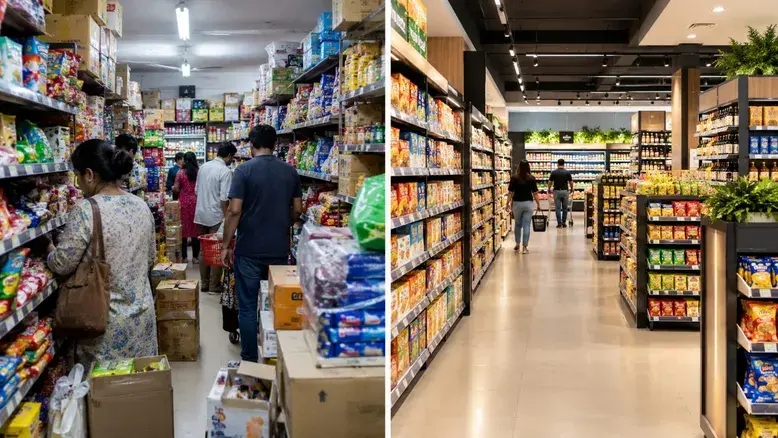
Modern retail display racks give your supermarket a professional and attractive appearance, improving brand perception.
Wall-Side Display Racks
Wall-side racks use vertical wall space and help keep the central floor area available for customer movement. They can be used for packaged groceries, personal care products, household essentials, and other lightweight merchandise, depending on the rack specifications.
Compact Adjustable Shelving
Adjustable shelves allow retailers to accommodate products of different heights. This flexibility is useful when product ranges change or new items are introduced.
Small Counter Display Units
Compact counter displays can be used for small, frequently purchased products near the billing area. Their placement should not obstruct checkout operations.
Layout Tips for a 200 Sq. Ft. Store
- Use wall space wherever practical.
- Select shelving dimensions according to the actual store measurements.
- Keep the entrance and checkout area clear.
- Avoid placing large display units in narrow movement areas.
- Organize products by category to make shopping easie
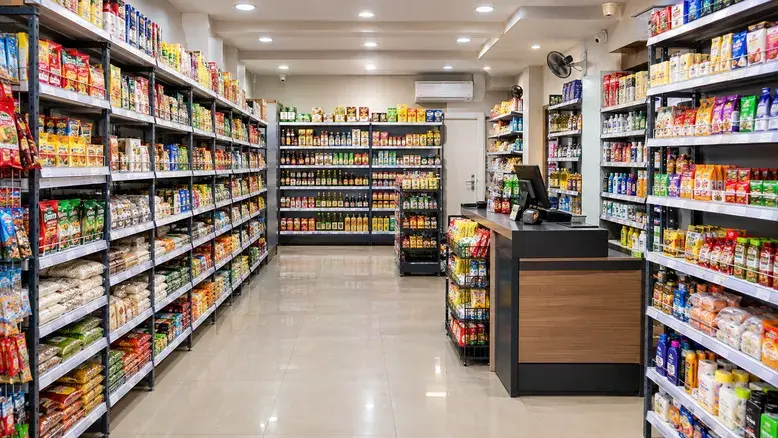
2. How to Choose Supermarket Display Racks for a 500 Sq. Ft. Store
A 500 sq. ft. store generally offers more flexibility for combining wall-side shelving with compact gondola racks. The goal is to display more products while preserving a comfortable shopping route.
Recommended Rack Types for a 500 Sq. Ft. Store
Wall-Side Supermarket Racks
Wall-side racks help maximize perimeter space and are useful for products that need organized shelf presentation.
Compact Gondola Display Racks
Gondola racks can create central product displays. Their dimensions and placement should be selected according to store measurements and the space needed for customers to move around them.
End Cap Display Racks
End cap displays can highlight promotional items, seasonal products, or frequently purchased merchandise. They should be positioned where they remain visible without creating bottlenecks.
Layout Tips for a 500 Sq. Ft. Store
- Combine wall-side racks with a carefully planned central display.
- Group similar products together.
- Keep frequently purchased products easy to locate.
- Check the available walking space before finalizing rack dimensions.
- Use end displays selectively instead of filling every open area.
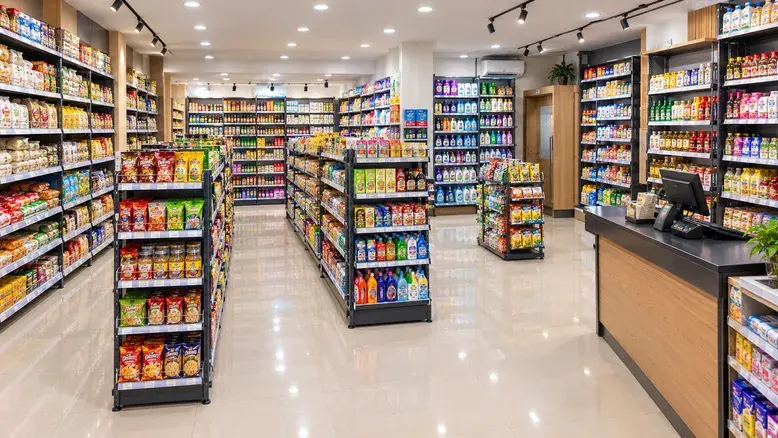
4. How to Choose Supermarket Display Racks for a Hypermarket
Hypermarkets require a more comprehensive shelving plan because they typically accommodate a wide range of products, higher inventory volumes, and multiple retail departments.
Rack selection should account for product weight, shelf capacity, display height, restocking requirements, and customer accessibility.
Recommended Rack Types for a Hypermarket
Heavy-Duty Gondola Racks
Heavy-duty gondola systems may be suitable for high-volume retail areas when their specifications match the intended products and loading requirements.
Wall-Side Shelving Systems
Wall-side shelving helps organize merchandise along the store perimeter and can support a consistent display arrangement across departments.
End Cap and Promotional Displays
These units can highlight special offers and featured merchandise. Their placement should maintain clear customer routes and comply with the store’s operational requirements.
Specialized Product Displays
Different departments may require different shelving configurations. Select suitable units according to the dimensions, weight, and handling needs of each product category.
Backroom Storage Racks
Storage racks can help organize reserve inventory separately from the customer-facing display area. Select them based on the available storage space and required load capacity.
Layout Tips for a Hypermarket
- Plan shelving by department and product category.
- Consider inventory replenishment and staff access.
- Select rack specifications according to expected loads.
- Maintain accessible and clearly defined customer routes.
- Review the layout before expanding or rearranging display systems.
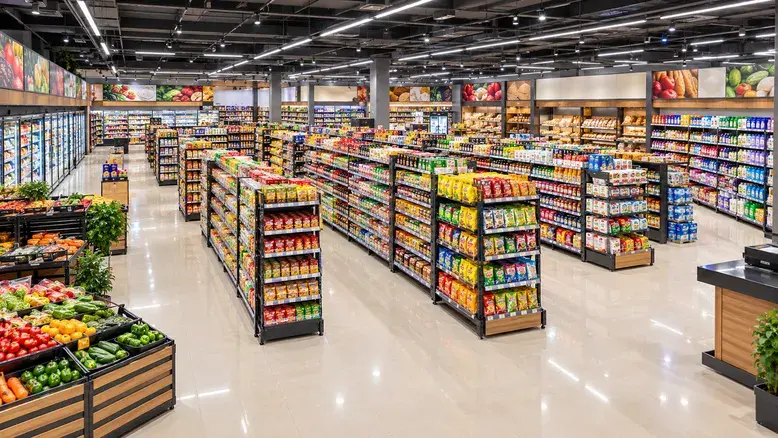
Key Factors to Consider Before Buying Supermarket Display Racks
Choosing supermarket display racks involves more than matching shelving to the available floor area. Retailers should also evaluate product requirements, material quality, flexibility, and long-term usability.
Store Measurements and Layout
Measure the available floor space, wall lengths, entrances, columns, checkout area, and other fixed features before deciding on rack dimensions.
Product Dimensions and Weight
Shelf depth, height, and load capacity should match the products being displayed. Always confirm the manufacturer’s specified load limits.
Material and Finish
Metal racks with a suitable finish can provide a durable solution for many retail environments. Consider the intended usage, finish quality, maintenance requirements, and operating conditions.
Adjustable Shelves and Modularity
Adjustable shelves help accommodate different packaging sizes. Modular systems can also make future layout changes easier, subject to the rack system’s design.
Installation and Maintenance
Consider installation requirements, access for cleaning, shelf adjustment, and routine inspection when comparing rack systems.
Budget and Future Expansion
Compare rack specifications, installation requirements, and expected usage rather than choosing solely by initial price. A flexible system may be more practical when the product range or store layout changes.
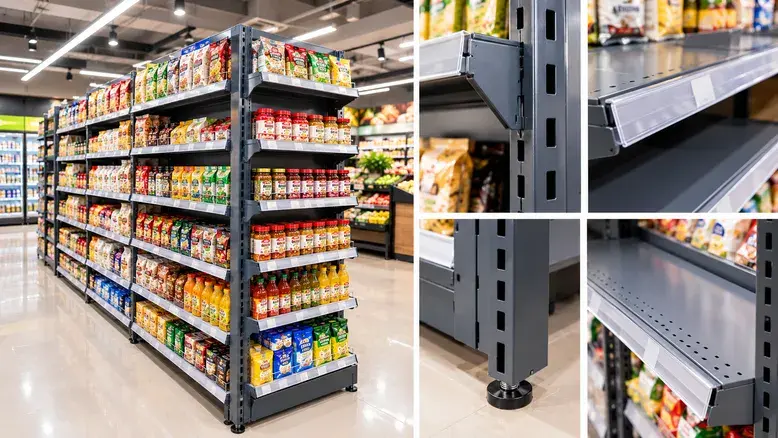
Common Mistakes to Avoid When Selecting Supermarket Racks
Retailers can avoid many layout and usability problems by reviewing their requirements before purchasing shelving.
Common mistakes include:
- Selecting racks before measuring the store.
- Choosing shelf depth or height that does not suit the products.
- Filling a small store with too many display units.
- Ignoring customer movement and staff access.
- Overlooking product weight and rack load capacity.
- Using the same rack configuration for every product category.
- Failing to consider future layout changes and maintenance.
Reviewing these factors before installation helps create a more practical and organized retail environment.
Why Choose Bharat Display Solutions for Supermarket Display Racks?
Bharat Display Solutions provides supermarket display rack solutions for retail businesses with different space and product requirements. The appropriate configuration depends on store dimensions, merchandise, shelf capacity, and the intended layout.
When evaluating a rack solution, retailers can discuss:
- Suitable rack configurations for their available space.
- Shelf dimensions and product display requirements.
- Adjustable shelving and layout flexibility.
- Material, finish, and load-capacity specifications.
- Installation requirements and future expansion needs.
To explore available solutions, visit the supermarket display rack page and review the options relevant to your store.
Frequently Asked Questions
1. Which supermarket racks are best for a 200 sq. ft. store?
Wall-side racks and compact adjustable shelving are often practical options because they use available wall space and can preserve the central area for customer movement. Final selection depends on the store’s measurements and product range.
2. Can gondola racks be used in a 500 sq. ft. supermarket?
Yes. Compact gondola racks may be suitable for a 500 sq. ft. store when their dimensions and placement leave sufficient space for customers and staff to move comfortably.
3. What type of racks are suitable for a 1,000 sq. ft. supermarket?
A 1,000 sq. ft. supermarket may use double-sided gondola racks, wall-side shelving, and end cap displays. The best combination depends on the layout, product categories, and required storage capacity.
4. Which racks are suitable for a hypermarket?
Hypermarkets may require a combination of gondola racks, wall-side shelving, promotional displays, specialized product racks, and backroom storage systems. Specifications should match the products and expected loads.
5. How do I decide the right rack size for my store?
Measure the store, identify product dimensions and weight, plan customer routes, and compare suitable rack configurations before purchasing. Confirm shelf capacity and installation requirements with the supplier.
Conclusion
Choosing supermarket display racks according to store size helps retailers organize products, use available space efficiently, and provide a more convenient shopping experience. A 200 sq. ft. store may benefit from compact wall-side shelving, while larger supermarkets and hypermarkets can use a combination of gondola racks, end displays, and specialized shelving.
Before making a decision, assess your store measurements, product requirements, shelf capacity, and future needs. The right rack configuration should support both practical product display and smooth store operations.