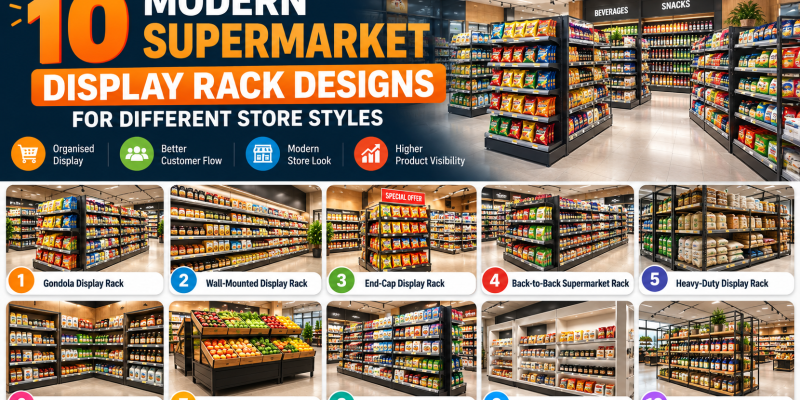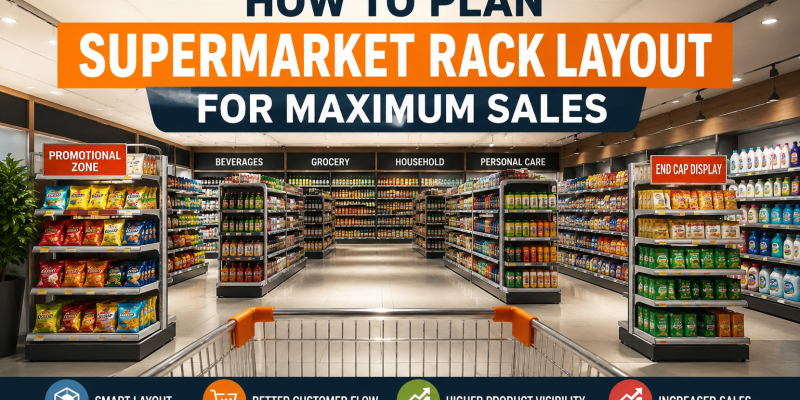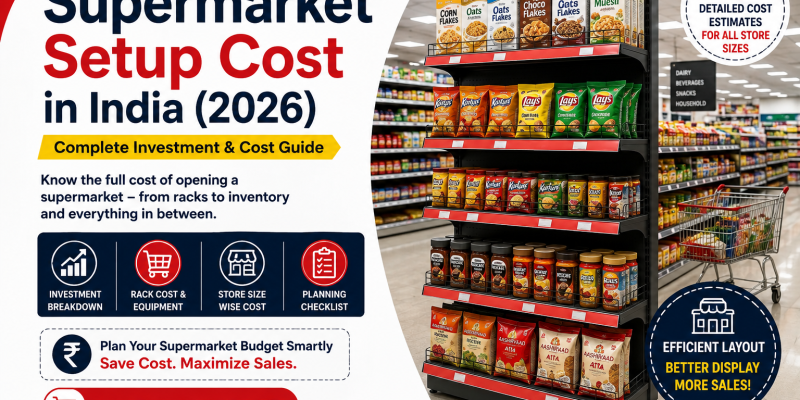
A well-planned supermarket rack design can make a store look more organized, modern, and visually appealing. The right combination of shelving, product arrangement, lighting, and display areas can help create a clear shopping environment without making the store feel crowded.
From small grocery stores to modern supermarkets and large hypermarkets, display racks designs can be adapted according to the available space, product categories, and overall interior style.
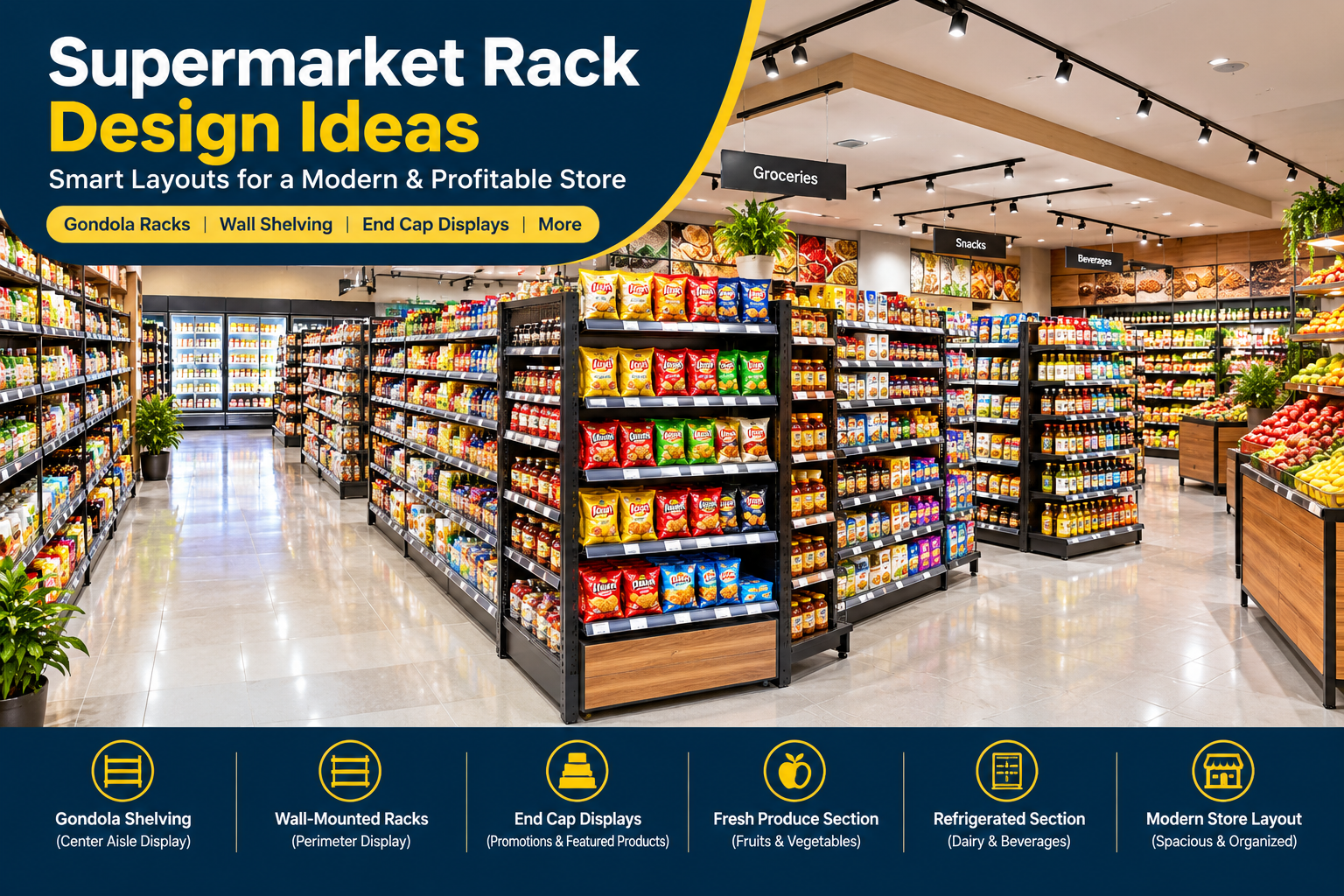
This guide explores practical supermarket rack design ideas, including gondola racks, wall-mounted racks, modular shelving, heavy-duty displays, end-cap designs, lighting, and layout ideas for different types of stores.
The Role of Rack Design in a Supermarket
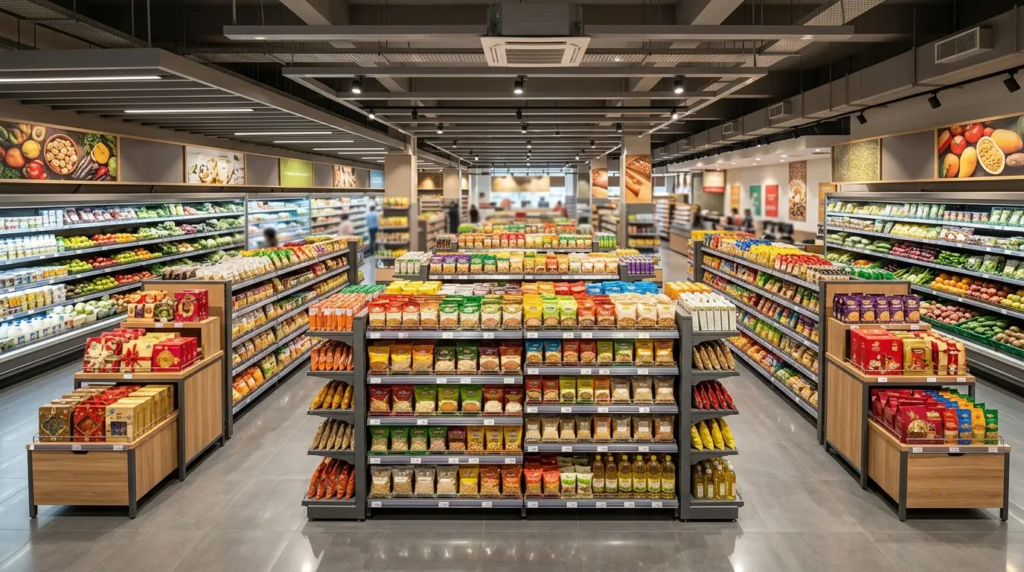
Supermarket racks are more than simple storage units. Their arrangement contributes to the overall appearance and organization of a store.
A thoughtful rack layout can help:
- Create clear product sections
- Make products easier to see
- Use wall and floor space effectively
- Separate different product categories
- Create a consistent store appearance
- Provide space for promotional displays
- Maintain a comfortable shopping flow
The design should match the character of the store. A compact grocery store may need a different arrangement from a large hypermarket, while a modern supermarket may use a combination of different rack styles to create a more contemporary interior.
Gondola Racks for Supermarket Aisles
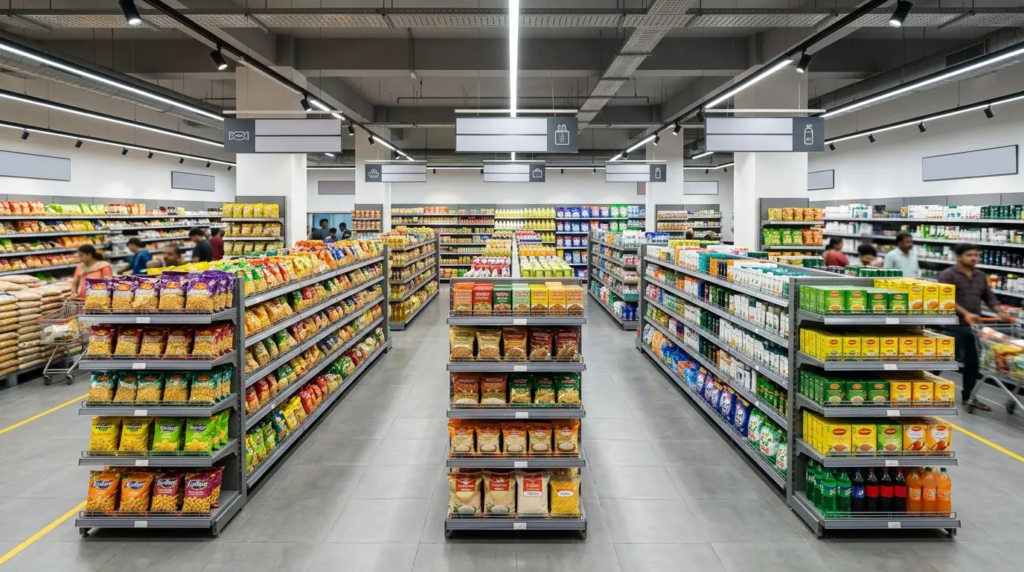
Gondola center display racks are commonly used to create central product aisles. Their open design allows products to be displayed from different sides and makes them suitable for a variety of supermarket sections.
For a modern supermarket interior, gondola racks can be arranged in parallel rows to create a clean and consistent visual layout.
They can be used for categories such as:
- Packaged grocery products
- Snacks
- Personal care products
- Household essentials
- Daily-use products
Gondola Rack Design Ideas
For a visually organized store:
- Keep similar categories together.
- Maintain consistent shelf arrangements.
- Avoid overcrowding individual sections.
- Use clear category signage.
- Coordinate rack placement with the overall aisle layout.
The final arrangement should be based on the store’s available floor space and product range rather than following one fixed layout
Wall-Mounted Supermarket Racks
A combination of wall shelving and wall mount display racks can help make effective use of perimeter space.
They can work particularly well in smaller stores where every part of the available space needs to contribute to the overall display.
Wall shelving can be used for:
- Grocery products
- Household products
- Personal care items
- Packaged foods
- Other everyday essentials
Wall Rack Design for Small Stores
A small grocery store rack design can combine wall-mounted shelving with compact central displays.
Instead of placing racks throughout the entire floor area, the perimeter can be used for product storage while the centre remains relatively open for customer movement.
This can give a small store a cleaner and less crowded appearance.
Modular Supermarket Rack Designs
A modern supermarket rack design generally focuses on clean lines, consistent arrangements, clear product visibility, and a balanced interior.
Instead of using complicated decorative elements, the store can create a modern appearance through:
- Consistent rack alignment
- Simple signage
- Organized product grouping
- Appropriate lighting
- Open visual areas
- Coordinated displays
Some supermarket sections require shelving designed for heavier or larger products.
Heavy-Duty Retail Racks
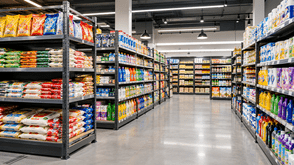
Heavy-duty retail racks can be considered for areas where the displayed products require stronger shelving configurations.
The appropriate rack should be selected according to:
- Product weight
- Shelf dimensions
- Storage requirements
- Available floor space
- Product accessibility
- Intended use
End Cap and Promotional Rack Designs
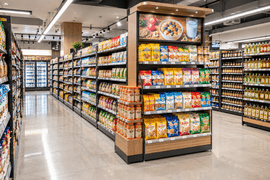
End caps are display areas positioned at the ends of supermarket rack rows. Because they are naturally visible as customers move through aisles, they can become useful focal points within the store.
Supermarket end cap display ideas can include:
- Seasonal product displays
- Featured product categories
- New product presentations
- Promotional selections
- Complementary product groupings
Creating Attractive End-Cap Displays
An end cap does not need to be filled with many different products.
A cleaner approach is to create a clear visual theme.
For example:
Snack End Cap:
Group selected snack products together.
Festival End Cap:
Create a seasonal product display.
Household End Cap:
Present related household products in one dedicated area.
Materials Used in Supermarket Racks
The material and finish of a rack can influence both its appearance and suitability for a particular store environment.
Common options include:
Mild Steel
Mild steel is commonly used for supermarket and retail shelving because it can be configured into different rack designs and shelf arrangements.
Powder-Coated Steel
Powder-coated finishes can provide a consistent appearance and are available in different finish options depending on the rack design.
Stainless Steel
Stainless steel can be considered for areas where appearance, cleanliness, or the store environment makes it appropriate.
Wire Shelving
The appropriate material should depend on the intended use, product category, store environment, and required rack configuration.
Store Layout and Aisle Planning
Rack design and store layout should be considered together.
A basic supermarket arrangement may include:
Perimeter Walls → Wall-Mounted Racks
Central Floor → Gondola Racks
Aisle Ends → End-Cap Displays
Selected Areas → Promotional Displays
This creates different display zones while keeping the overall store organized.
Lighting and Rack Layout
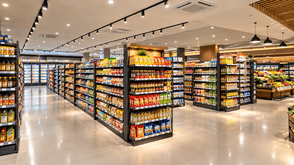
Lighting can significantly influence how a supermarket rack display appears.
General store lighting can provide consistent visibility throughout the shopping area, while focused lighting can draw attention to selected displays.
For a modern store:
- Keep aisle lighting consistent.
- Avoid creating unnecessarily dark areas.
- Use focused lighting for selected feature displays.
- Coordinate lighting with signage and product zones.
- Make sure products remain clearly visible across the shelves.
Lighting should complement the rack design rather than become a distraction.
Traditional vs Modular Supermarket Rack Design
Both traditional and modular rack arrangements can be used depending on the desired store appearance and flexibility.
| Traditional Rack Arrangement | Modular Rack Arrangement |
| More fixed arrangement | More flexible configuration |
| Consistent shelf structure | Shelves can be adjusted |
| Suitable for established layouts | Useful for changing displays |
| Simple visual appearance | Adaptable to different categories |
The choice should depend on the store layout, product mix, and how frequently the display arrangement needs to change.
Customized Supermarket Shelving
Every supermarket has a different floor plan and product mix. Because of this, a rack arrangement that works for one store may not suit another.
Customized shelving can help adapt the display to:
- Available wall space
- Store dimensions
- Product categories
- Corner areas
- Aisle arrangement
- Different shelf requirements
- Overall interior design
Customization can also help maintain a consistent appearance when different rack types are used across the same store.
Rack Design and Customer Experience
Rack design contributes to the way customers move through and view a supermarket.
A clear layout can make it easier to identify different product sections.
For example:
Entrance → Featured Display → Grocery Section → Personal Care → Household → Checkout
The exact customer flow will vary from store to store, but clear category separation can make the shopping environment easier to understand.
Good product presentation also depends on keeping shelves organized and avoiding visually confusing displays.
How to Choose a Supermarket Rack Design
For a design-focused approach, start with the store itself rather than selecting racks individually.
Consider:
Store Size
A compact store may benefit from wall-mounted and space-conscious shelving, while larger stores have more flexibility to use multiple rack rows and display zones.
Product Categories
Different product categories may require different shelf arrangements.
Interior Style
The rack finish, arrangement, signage, and lighting should work together.
Customer Movement
Rack placement should leave a logical route through the store.
Display Areas
Consider where promotional and end-cap displays can be positioned without disrupting the overall layout.
Future Changes
Modular arrangements can be useful when product categories or displays are expected to change.
Ideal Rack Designs for Different Store Formats
Different store formats can use different combinations of rack designs.
Small Grocery Stores
A small store can focus on:
- Wall-mounted racks
- Compact shelving
- Corner displays
- Simple category sections
- Limited but well-planned central displays
The objective is to use available space without making the interior feel overcrowded.
Modern Supermarkets
Modern supermarkets can combine:
- Gondola racks
- Wall-mounted shelving
- Modular displays
- End caps
- Coordinated lighting
- Clear category signage
A consistent arrangement can create a clean and contemporary appearance.
Hypermarkets
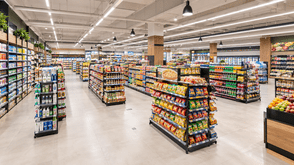
Large-format stores can use hypermarket display racks to create organized category-based display zones.
They can use:
- Long gondola rows
- Wall-mounted displays
- Category-specific shelving
- Promotional end caps
- Feature displays
- Larger visual zones
The overall design should remain easy to navigate despite the larger number of product categories.
Bharat Display Solutions for Supermarket Rack Requirements
Bharat Display Solutions provides supermarket and retail display rack solutions for different store formats.
For businesses looking for customized retail shelving, Bharat Display Solutions is a display rack manufacturer in Delhi offering display rack solutions for different store formats.
Different rack configurations can be considered for grocery stores, supermarkets, hypermarkets, and other retail environments.
For actual product specifications, dimensions, finishes, customization options, and available configurations, refer to the relevant product pages or contact the company directly.
Important: Keep only company claims that you can verify from the actual website, product specifications, or company-approved information.
FAQ:
What are some supermarket rack design ideas?
Popular design approaches include gondola racks, wall-mounted shelving, modular racks, corner displays, and end-cap displays. These can be combined according to the store’s layout and product categories.
Which rack design is suitable for a small grocery store?
Small stores can consider wall-mounted racks, compact shelving, corner displays, and carefully planned central racks to use available space while maintaining clear customer movement.
How can I create a modern supermarket rack design?
A modern supermarket can use clean rack arrangements, consistent shelving, clear category sections, suitable lighting, simple signage, and well-planned end-cap displays.
What are supermarket end-cap displays?
End-cap displays are positioned at the ends of supermarket rack rows. They can be used for featured products, seasonal displays, promotional selections, or specific product categories.
How does lighting affect supermarket rack design?
Lighting affects product visibility and the overall appearance of the store. Consistent general lighting combined with focused lighting in selected areas can help create a balanced display.
How should racks be arranged in a hypermarket?
Hypermarkets can use long gondola rows, wall-mounted displays, category-based sections, and end caps. The arrangement should follow the store’s floor plan and product categories.
Can different supermarket rack designs be used in one store?
Yes. Gondola, wall-mounted, modular, corner, and end-cap displays can be combined to create different product zones while maintaining a consistent overall interior.
Conclusion
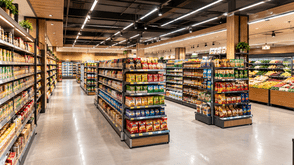
Supermarket rack design is an important part of creating an organized and visually appealing retail environment. The right combination of rack styles, layout, lighting, product grouping, and end-cap displays can give each store its own visual character.
Small grocery stores can focus on efficient use of available space, modern supermarkets can combine clean shelving with coordinated lighting, and hypermarkets can create larger category-based display zones.
The best supermarket rack design ideas are those that work naturally with the store’s space, products, and overall interior concept.