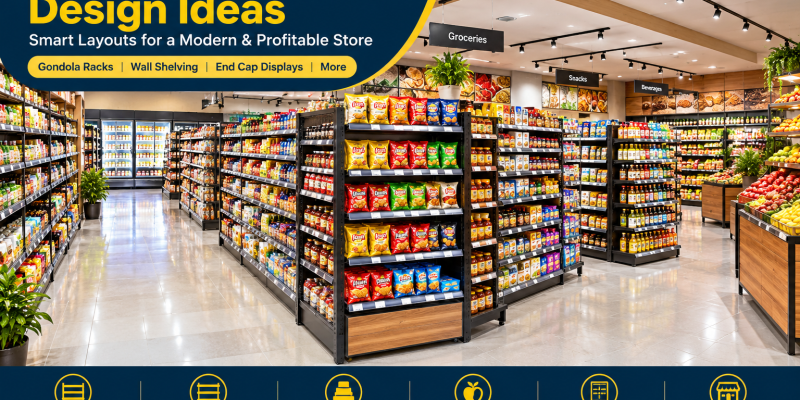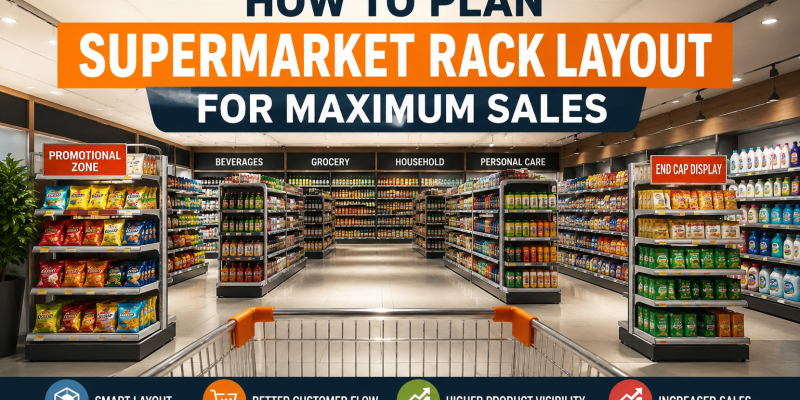
A supermarket display is not built around one type of rack. Different sections of a store have different display requirements, which is why modern supermarkets often combine several rack designs within the same space.
A central grocery aisle may use a double-sided gondola rack, while the perimeter walls can use single-sided shelving. Fresh produce may need an open display, and promotional products can be placed on end-cap racks.
The rack design, shelf arrangement, finish and placement all contribute to how products are presented inside the store.
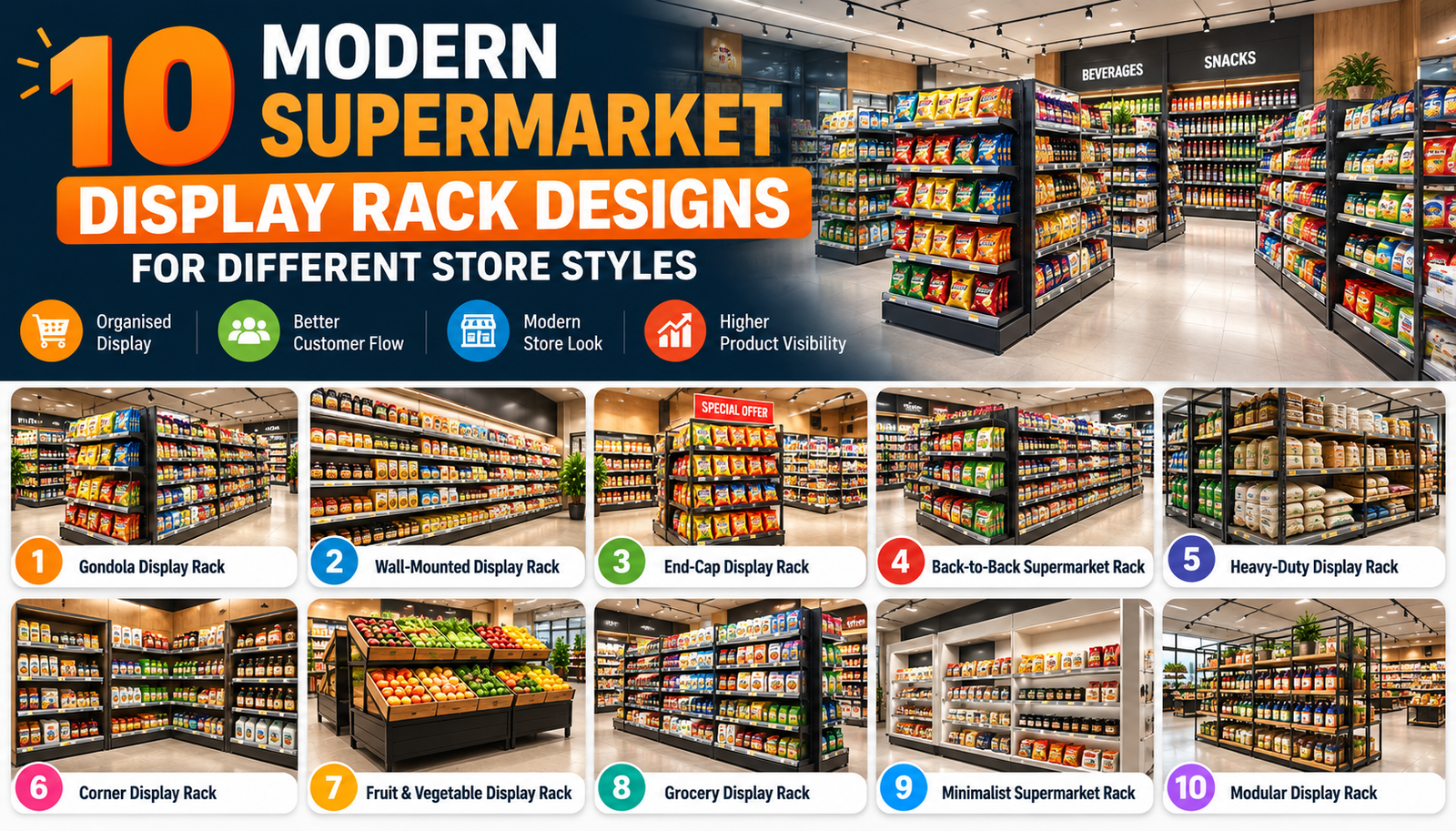
This guide covers 10 Modern Supermarket Display Racks and where each type can fit into a supermarket environment.
Quick Answer: 10 Modern Supermarket Display Racks
Modern supermarket display racks come in different designs to suit different store sections, product categories, and available space. From gondola and wall-mounted racks to end-cap, grocery, heavy-duty, and modular displays, each design offers a different way to organise products and create a consistent supermarket layout.
1. Double-Sided Gondola Display Rack
The double-sided gondola rack is one of the most common display formats used in supermarket aisles.
It has shelving on both sides, allowing two product-facing sections to share the same central structure. Several units can be placed in a row to create organised aisles throughout the store.
Because the shelves can be arranged at different heights, gondola racks can accommodate products of different sizes.
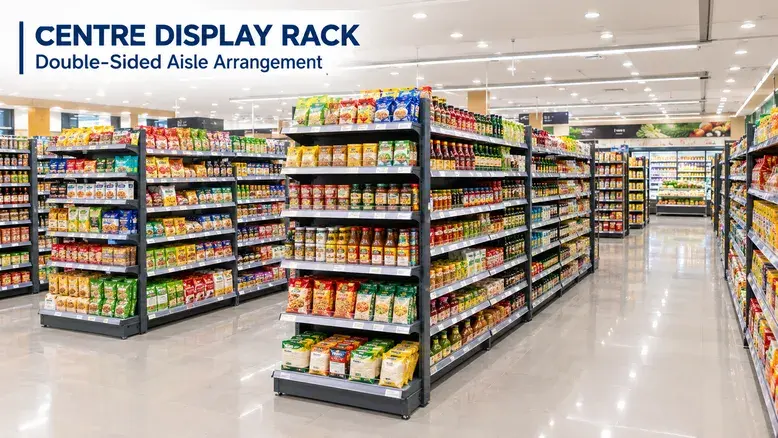
Common applications include:
- Packaged groceries
- Snacks
- Household products
- Personal-care products
- Daily-use items
For stores planning a complete shelving system, explore the supermarket display rack range for different configurations.
2. Wall-Mounted Supermarket Display Rack
Not every rack needs to occupy the centre of the store.
Wall-mounted or single-sided display racks are designed to sit against a wall, making them useful for perimeter areas and sections where the central floor needs to remain open.
These racks can create continuous shelving along the walls without disrupting the main aisle structure.
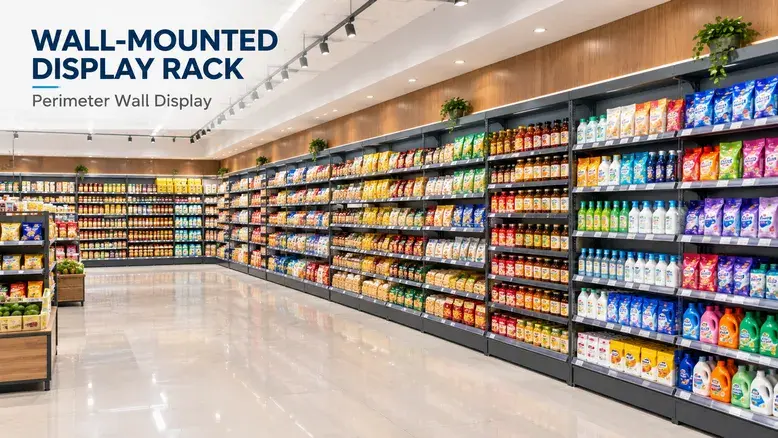
They are commonly used for:
- Grocery products
- Packaged food
- Household items
- Personal-care products
- Small retail products
The design can also be coordinated with central shelving so that the entire store maintains a consistent appearance.
3. End-Cap Display Rack
An end-cap display is positioned at the end of a supermarket aisle.
Unlike regular shelving, which customers see while walking along an aisle, an end-cap is visible from the cross-aisle. This gives it a distinct position within the store.
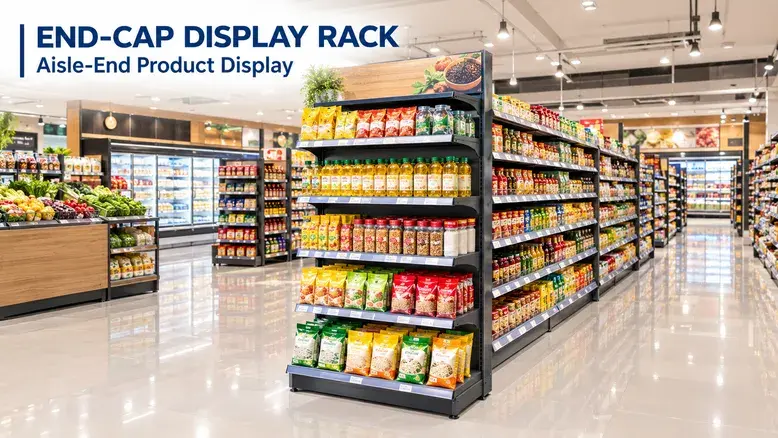
End-cap racks can be used for:
- Promotional merchandise
- Seasonal products
- New products
- Special offers
- Frequently purchased items
Their position also helps break up long rows of shelving and creates additional visual points within the supermarket.
4. Back-to-Back Supermarket Rack
A back-to-back rack consists of two shelving sections positioned against one another.
This arrangement creates a central display structure with products facing customers on both sides.
It is particularly suitable for larger supermarkets where several parallel aisles are required.
One side can be allocated to one product category while the opposite side serves another. This allows the store to divide merchandise into sections without creating unnecessary gaps between shelving units.
Back-to-back arrangements are also useful when the supermarket wants a consistent appearance across multiple aisles.
5. Heavy-Duty Supermarket Display Rack
Some supermarket sections require stronger shelving because the products are heavier, larger or stored in greater quantities.
A heavy-duty display rack is designed around these requirements, using a stronger structure than standard lightweight shelving.
It can be suitable for sections containing:
- Bulk grocery products
- Large packaged goods
- Household supplies
- Beverage-related products
- Heavier retail merchandise
The visual design does not have to look industrial. With an appropriate finish and shelf arrangement, heavy-duty shelving can still form part of a clean supermarket interior.
6. Corner Display Rack
Corners are often difficult to use effectively with standard straight shelving.
A corner display rack can connect two shelving sections or create a dedicated display point where two walls meet.
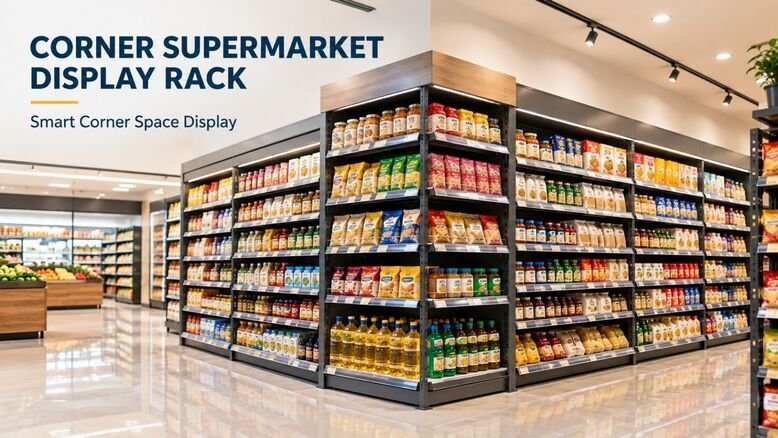
This can be particularly useful in smaller supermarkets where every available section of wall and floor space matters.
A well-planned corner display can also make the transition between two product sections look more intentional rather than leaving an unused corner.
7. Fruit and Vegetable Display Rack
Fresh produce requires a different presentation from packaged supermarket products.
Customers generally need to see the produce clearly and access individual items easily. For this reason, fruit and vegetable displays often use open, tiered, basket-style or inclined configurations.
A fruit and vegetable display rack can be used for sections containing:
- Fruits
- Vegetables
- Potatoes
- Onions
- Fresh packaged produce
The open design makes the products easier to see and gives the produce section a different visual character from conventional grocery aisles.
The rack finish can also be selected to complement the supermarket’s overall interior.
8. Grocery Display Rack
A grocery display rack is designed around the structured presentation of packaged products.
Multiple horizontal shelves create several product-facing levels, while adjustable shelf spacing can accommodate products with different dimensions.
A grocery display rack can be used across different supermarket sections because the shelving configuration can be adapted according to the merchandise.
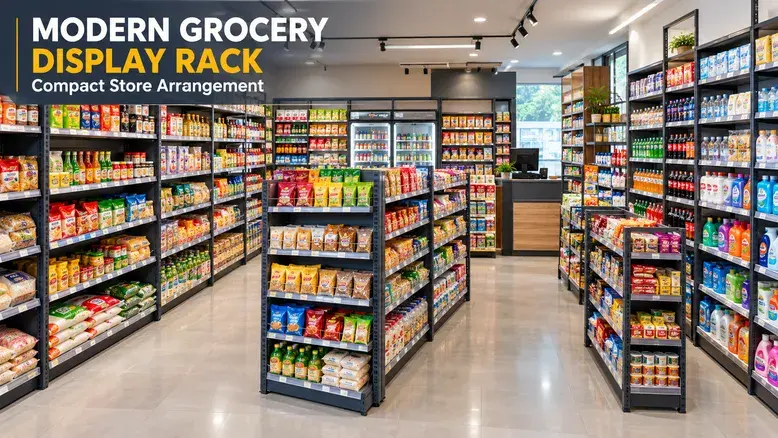
For example, smaller packets can be displayed using closely spaced shelves, while bottles, boxes or larger containers may require additional vertical clearance.
When several racks use consistent dimensions and finishes, they create a more organised appearance throughout the store.
9. Minimalist Supermarket Display Rack
Modern supermarket interiors do not always rely on visually complicated fixtures.
Minimalist rack designs focus on clean lines, simple structures and a consistent finish. The objective is to keep the fixture visually controlled while allowing the products themselves to remain the focus.
This style can work particularly well with:
- Modern lighting
- Neutral interiors
- Clear signage
- Open floor plans
- Contemporary retail concepts
A minimalist rack can therefore become part of the supermarket’s interior design rather than looking like a separate piece of equipment.
10. Modular Supermarket Display Rack
A modular supermarket rack is designed around flexibility.
Shelves and other components can be configured according to the products being displayed. This can be useful when different sections have different merchandise requirements or when the product mix changes over time.
For example, one section may need closely spaced shelves for small packaged products, while another requires larger gaps for bottles or taller boxes.
Modular systems allow the supermarket to maintain a consistent rack structure while adapting individual sections to different products.
How Different Supermarket Rack Designs Work Together
A modern supermarket does not need to use one rack style throughout the entire store.
Different areas can use different configurations depending on the products and available space.
| Supermarket Area | Suitable Rack Design |
|---|---|
| Central aisles | Double-sided gondola rack |
| Perimeter walls | Wall-mounted rack |
| Aisle ends | End-cap rack |
| Parallel aisles | Back-to-back rack |
| Heavy products | Heavy-duty rack |
| Store corners | Corner display rack |
| Fresh produce | Fruit and vegetable display |
| Grocery sections | Grocery display rack |
| Contemporary sections | Minimalist rack |
| Flexible merchandise areas | Modular rack |
The goal is not to make every rack identical. The goal is to make different rack types work together as part of one store layout.
Supermarket Rack Design and Store Layout
Rack selection and store layout are closely connected.
A supermarket can have well-designed racks but still have an ineffective interior if the aisles are poorly arranged or the different product sections do not connect logically.
Customer movement, aisle width, product placement, impulse areas and checkout positioning all form part of the wider layout.
For a separate look at these elements, read the guide to supermarket rack layout for maximum sales.
That article focuses specifically on layout, while this guide focuses on the different rack designs themselves.
Modern Supermarket Rack Design Ideas
There is no single definition of a modern supermarket rack.
Some stores use straightforward metal shelving with a clean finish. Others combine racks with signage, lighting, branded panels and specialised display fixtures.
The design can change depending on:
- Store size
- Product categories
- Available floor area
- Interior design
- Shelf requirements
- Customer movement
- Display objectives
For more visual inspiration, including ideas for modern stores, smaller supermarkets, hypermarkets, lighting and end-cap displays, explore these supermarket rack design ideas.
Matching Rack Design With Product Categories
The same rack configuration may not work equally well for every supermarket section.
Packaged groceries generally need structured horizontal shelving. Fresh produce benefits from a more open presentation. Heavy merchandise may require stronger shelving, while promotional products can be displayed separately at aisle ends.
This is why supermarket interiors often combine several rack designs instead of depending on one standard fixture.
A practical approach is to consider the product category first and then select a rack configuration that allows the products to remain visible, organised and accessible.
Frequently Asked Questions
What is the most common rack used in supermarkets?
Double-sided gondola racks are widely used for central supermarket aisles because they allow products to be displayed on both sides of a central structure.
What type of rack is used for supermarket walls?
Single-sided or wall-mounted display racks are commonly used along the perimeter walls of supermarkets.
Which rack is suitable for fresh fruits and vegetables?
Open, tiered and basket-style fruit and vegetable displays are commonly used because they provide better visibility and accessibility for fresh produce.
What is an end-cap rack?
An end-cap rack is a display positioned at the end of a supermarket aisle. It can be used to create a separate product display from the regular aisle shelving.
Do supermarkets use different types of racks?
Yes. A supermarket may combine gondola racks, wall-mounted racks, end-cap displays, produce displays, heavy-duty racks and other configurations depending on the store layout and product categories.
Final Thoughts
Modern supermarket display racks are available in many configurations, and each one can serve a different part of the store.
Gondola racks can structure central aisles, wall-mounted units can use perimeter space, end-cap displays can create additional product-facing areas, while specialised racks can support fresh produce or heavier merchandise.
Rather than treating the supermarket as one large display area, different rack designs can be combined according to the products, store dimensions and overall layout.
For businesses planning a supermarket shelving system, exploring the available supermarket display rack configurations is a useful starting point before deciding how individual store sections should be arranged.